
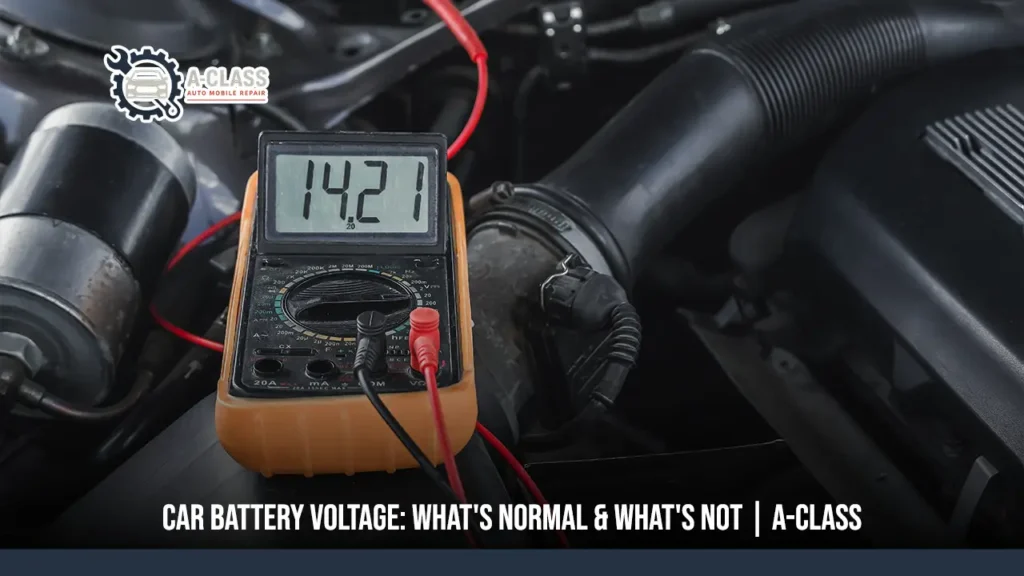
A healthy car battery voltage should read between 12.4 and 12.6 volts when the engine is off. To check your car battery voltage accurately, use a digital multimeter set to 20V DC, then connect the red probe to the positive (+) terminal and the black probe to the negative (-) terminal. While the engine is running, the voltage should typically increase to between 13.5 and 14.5 volts as the alternator recharges the battery.
What Is a Normal Car Battery Voltage?
Understanding the electrical baseline of your vehicle is crucial for avoiding unexpected breakdowns on the road. A steady power supply ensures that every internal component functions harmoniously without straining the alternator, and the main factors defining normal car battery voltage include:
- Resting State Readings: When the car is completely turned off and parked, the ideal 12v battery reading should be right at 12.6 volts or slightly higher, indicating a fully charged unit.
- The Chemistry Inside: Inside the plastic casing, there are six individual cells, each generating about 2.1 volts, which perfectly combine to produce the standard electrical force needed for your vehicle.
- Surface Charge Illusion: Sometimes, taking a measurement immediately after driving shows an artificially high number, so it is always best to let the vehicle rest overnight before relying on the numbers.
- Impact of Extreme Temperatures: Freezing winters or scorching summers can alter the chemical reactions, making the numbers fluctuate slightly, which is a normal environmental response rather than a mechanical defect.
- Lifespan Degradation: As the unit ages over its typical three to five-year lifespan, its ability to hold a full charge gradually diminishes, meaning older units will naturally show slightly lower resting numbers.
Healthy Battery Voltage Range
Monitoring the electrical range helps you identify the exact difference between a thriving power source and one that is slowly failing. The core indicators of a healthy battery voltage range are:
1. The 100% Charge Mark
A reading of 12.6 volts means your storage cells are completely full and ready to deliver maximum starting power. This is the optimal state you want to see when you test your car in the morning before starting the ignition.
2. The 75% Capacity Level
When the meter shows around 12.4 volts, the unit is still functioning decently but has lost a quarter of its total capacity, which is often related to a weak alternator that is not fully restoring the charge during driving.
3. The 50% Danger Zone
Dropping down to 12.2 volts indicates that half of the power reserve is gone, which puts unnecessary stress on your vehicle’s charging system. You might notice sluggish starts, and immediate recharging with an external device is highly advised.
4. The 25% Critical State
Reaching 12.0 volts means the cells are almost entirely depleted, drastically increasing the risk of getting stranded. Attempting to crank the engine at this point might fail, and the internal lead plates begin to suffer permanent damage.
5. The Completely Dead Point
Anything reading 11.9 volts or lower is considered entirely discharged and structurally compromised. In most cases, a unit that drops this low frequently will not recover its full capacity and requires a complete replacement.
Normal 12V Car Battery Reading Guide
It is a common misconception that a twelve-volt system only produces exactly twelve volts of electricity during operation. In reality, the actual measurements fluctuate based on the physical demands placed on the electrical system, and the true variations include:
- The Baseline Minimum: A flat twelve volts is actually a warning sign that the unit is practically empty, rather than an indication of a perfect operating condition.
- Parasitic Draw Effects: Modern vehicles are packed with computers and alarms that constantly draw tiny amounts of power, which slowly chips away at the reserve capacity while the engine is off, making it harder to distinguish between a failing battery and a bad alternator in early stages.
- Active Accessory Drain: Turning on the headlights or radio without the engine running will cause an immediate but temporary drop in the visible numbers on your testing device.
- Rebound Capability: Once a heavy electrical load is turned off, a solid unit will quickly bounce back to its original resting numbers, proving that its internal structure remains robust.
- Inconsistent Cell Health: If you notice wildly jumping numbers during a basic test, it usually means that one of the internal lead cells has short-circuited and the entire unit is unstable.
Battery Voltage When Running vs Off
There is a massive difference in the numbers you will see depending on whether the motor is active or completely silent. The primary distinctions are:
| Phase / Condition | Voltage Reading | Indication |
| Active Charging Phase | 13.7V – 14.7V | The generator is successfully pushing fresh electricity back into the storage cells. |
| Handling Heavy Loads | Above 13.5V | The system is capable of handling high electrical demands (like A/C and high beams) without draining the core reserves. |
| Alternator Output Limit | Over 15V | The regulator is broken and overcharging the system. This dangerous condition will boil internal acids and destroy components. |
| Engine Off Stabilization | Gliding down from 14V | The internal chemical reactions take a few hours to settle entirely and reflect the true resting state. |
| Identifying Generator Failure | 12.6V or lower (while running) | The generator is completely dead. The vehicle is surviving solely on stored power and will shut down as soon as the reserve is empty. |
Low vs High Battery Voltage
Both extremes of the electrical spectrum pose significant threats to the complex wiring of modern automobiles. Maintaining a perfect balance is the only way to protect expensive onboard computers from catastrophic failures, and the major differences between these conditions are:
- Low Power Symptoms: Insufficient power primarily manifests as dimming headlights, slow cranking noises, and a general failure of power-hungry accessories like electric seats and windows.
- High Power Risks: Excessive electricity is far more destructive, as it can instantly fry delicate microchips, blow vital fuses, and cause permanent damage to the engine control unit.
- Sulphation Due to Undercharging: Leaving the cells in a constant state of low power causes lead sulfate crystals to harden on the plates, permanently ruining the ability to store energy.
- Acid Evaporation from Overcharging: Continuous exposure to extreme high voltage generates intense internal heat, causing the vital liquid electrolyte to evaporate and the plastic casing to swell dangerously.
- The Golden Middle Ground: A properly functioning system automatically adjusts the flow of electricity, ensuring the numbers never dip below 12.2 volts at rest or exceed 14.7 volts in motion.
Why Battery Voltage Drops?
Understanding the root causes of power loss can save you from being stranded in inconvenient locations. The most frequent reasons why your electrical strength plummets unexpectedly are:
1. Extended Periods of Inactivity
Cars that sit in a garage for weeks naturally lose their charge over time due to internal chemical self-discharge. Regular short drives are simply not enough to replenish the power lost during long resting phases.
2. Severe Weather Conditions
Extreme cold slows down the chemical reactions needed to produce electricity, reducing the overall output significantly. Conversely, intense heat accelerates internal corrosion, permanently lowering the maximum capacity.
3. Human Error and Left-On Lights
Forgetting to switch off the interior dome light or headlights overnight is a classic cause of complete drainage. This steady, uninterrupted draw empties the reserve entirely by the time morning arrives.
4. Hidden Electrical Shorts
Damaged wires or malfunctioning aftermarket stereos can create a continuous circuit that draws power even when the key is removed. Tracking down these silent energy thieves requires professional diagnostic tools.
5. Natural Wear and Tear
Every time a storage cell goes through a full cycle of draining and charging, it loses a tiny fraction of its efficiency. After several years, the physical materials degrade to the point where holding power becomes impossible.
Signs of Unhealthy Battery Voltage
Your vehicle will constantly communicate its mechanical distress through various subtle and obvious warnings before completely giving up. Paying attention to these early red flags is the easiest way to prevent a sudden roadside emergency, and the primary indicators are:
- The Dreaded Clicking Sound: When you turn the ignition key and hear a rapid machine-gun clicking instead of a smooth engine roar, the starter is starved of the heavy current it needs.
- Dashboard Warning Illumination: The appearance of the red warning icon on your cluster gauge is an explicit command from the computer indicating that the charging loop is fundamentally compromised.
- Sluggish Engine Turn-Over: If the motor cranks noticeably slower than usual, almost as if it is struggling to breathe, the peak cold cranking amps have severely degraded.
- Flickering Interior Displays: When the voltage fluctuates wildly, the sensitive digital screens on your dashboard and infotainment system will flicker, often accompanied by a battery light on the dashboard.
- Odd Odors Under the Hood: A distinct smell resembling rotten eggs strongly suggests that the internal cells are over-boiling and venting dangerous hydrogen gas due to electrical instability.

Need a fast and reliable mobile mechanic in Houston Texas? A-Class Auto offers 24/7 mobile auto repair with 47+ expert mechanics & 8+ years of experience. Call now!
Call NowHow to Check Battery Voltage with Multimeter?
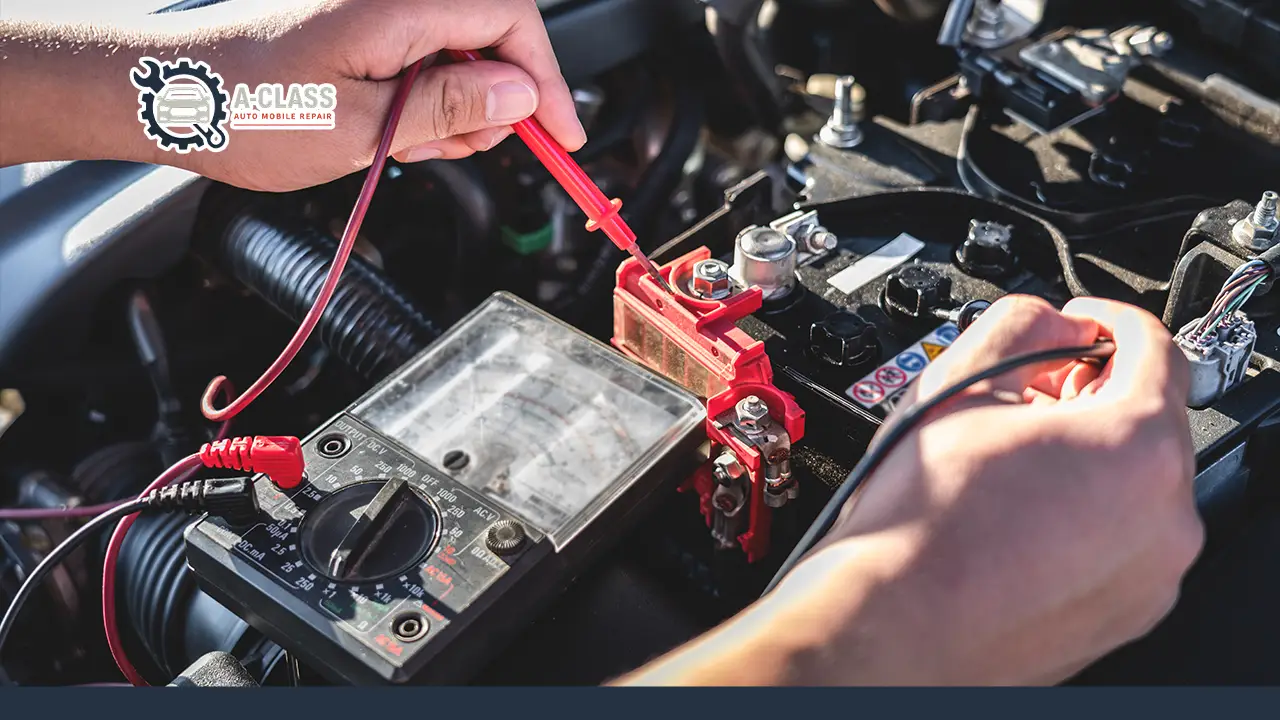
Testing your system manually is a straightforward process that requires only a basic digital tool and a few minutes of your time. The proper steps for how to check battery voltage with a multimeter safely are:
1. Preparing the Equipment
Set the dial on your digital testing device to the DC volts setting, usually marked by a solid line over a dashed line. Ensure the range is set to at least twenty volts to get an accurate reading.
2. Proper Probe Placement
Take the red probe and press it firmly against the positive terminal, which is usually marked with a plus sign or a red cover. Then, place the black probe on the negative terminal to complete the circuit safely.
3. Reading the Resting Numbers
Look at the digital display while the car is completely turned off and all doors are closed. A healthy unit will display a number between 12.4 and 12.6, confirming solid reserve power.
4. Removing Surface Fluctuation
If the car was recently driven, turn on the headlights for about two minutes without starting the engine, then turn them off. This removes the temporary artificial charge and reveals the true baseline number.
5. Cleaning Connections First
If the numbers jump around or show zero, you might have placed the probes on heavy corrosion rather than clean metal. Scrubbing the lead posts with a wire brush ensures the probes get a clear and accurate signal.
If you’re unsure about interpreting the results or need on-site help, a mobile mechanic houston tx can quickly diagnose the battery and charging system for you using professional tools.
Quick Battery Voltage Test Guide
If you do not have professional tools handy, you can still perform a basic health check using the features built right into your car. This visual inspection method gives you a surprisingly accurate estimate of your electrical stability, and the steps are:
- The Headlight Beam Test: Turn the vehicle on, switch the headlights to their brightest setting, and park facing a dark wall to observe the intensity of the light beams.
- Revving the Engine: Press the gas pedal slightly while watching the light projection; if the beams get noticeably brighter, the alternator is working but the core storage unit is weak.
- Consistent Brightness Rule: If the lights maintain a strong, unwavering brightness regardless of whether the engine is idling or revving, both the generator and the cells are in excellent shape.
- Listening to the Windows: Roll the electric windows up and down simultaneously with the engine turned off to see if the motors struggle or slow down significantly.
- Using the Dashboard Meter: Many modern trucks and SUVs feature a built-in analog gauge on the dashboard that should needle perfectly in the middle, around the 14-mark, during active driving.
What Voltage Starts a Car?
Initiating the combustion cycle requires a massive, instantaneous burst of energy to overcome the heavy physical resistance of the internal engine parts. The precise dynamics of what voltage starts a car effectively are:
1. The Minimum Threshold
To successfully engage the heavy-duty starter motor, the baseline measurement must not be lower than 12.2 volts. Anything below this threshold simply lacks the raw muscle required to spin the heavy flywheel.
2. The Cranking Drop
The moment you twist the key, the sheer demand for power pulls the system’s numbers down drastically for a second or two. It is entirely normal to see the display plunge to about 10 volts during this heavy exertion.
3. The Failure Point
If the numbers crash below 9.6 volts during the cranking phase, the starting sequence will abort entirely. The starter motor will disengage, and you will hear a rapid clicking sound instead of the engine firing.
4. Cold Weather Amplification
Thick, frozen engine oil creates massive physical resistance, meaning the electrical burst must be even stronger during winter mornings. This is why cold cranking amps are just as important as the raw voltage numbers.
5. Instant Recovery
The moment the engine catches and fires up, the heavy load disappears entirely from the electrical loop. A healthy system will instantly bounce back up from the temporary drop to the robust 14-volt charging range.
Battery Voltage and Charging System
The storage cells and the generator work in a continuous, inseparable loop to keep your vehicle moving safely down the road. If one part of this partnership fails, the other will inevitably suffer and break down shortly after, and their relationship includes:
- The Initial Power Loan: The storage unit acts as a bank, lending out a massive burst of energy solely to get the mechanical engine spinning on its own.
- The Repayment Process: Once the engine is self-sustaining, the generator takes over completely and immediately begins pumping electricity back to replace what was just spent.
- Running the Electronics: While driving, the generator provides one hundred percent of the power needed for the spark plugs, radio, and lights, bypassing the storage cells entirely.
- Filtering Electrical Spikes: The internal lead plates act as a giant surge protector, absorbing any dangerous spikes in power produced by the generator before they reach the sensitive computers.
- The Vicious Cycle of Failure: A weak storage unit forces the generator to work at maximum capacity continuously, which eventually burns out its internal wires due to extreme overexertion.
When Voltage Means Battery Trouble?
Knowing exactly when to interpret electrical readings as a cry for help can save you from replacing perfectly good parts unnecessarily. The specific scenarios where the numbers point directly to cell degradation are:
1. The Quick Drain Scenario
If you charge the unit to a perfect 12.6, but it drops to 12.0 overnight while completely disconnected from the car, the internal cells are ruined. The chemical structure can no longer hold onto the energy.
2. The Boiling Overcharge
Finding wet acid stains around the plastic casing despite the generator putting out normal numbers indicates extreme internal resistance. The unit is basically cooking itself from the inside out and must be removed.
3. The Dead Cell Diagnosis
A reading that stays stubbornly at 10.5 volts, no matter how long you leave it on a charger, is a classic sign. This specific number means exactly one of the six internal cells has permanently short-circuited.
4. Swelling and Deformation
Even if the electrical tests look relatively okay, a physical case that is bulging outward means internal pressure has built up dangerously. This structural failure is a ticking time bomb waiting to split open.
5. Refusal to Accept Charge
If you connect a smart charger and the numbers instantly shoot up to 14 volts but drop to zero the second you disconnect it, the plates are severely sulfated. The unit is pretending to be full but has zero actual depth of capacity.
Maintaining the correct car battery voltage is absolutely essential for avoiding sudden breakdowns and keeping your vehicle’s complex electrical systems running smoothly. By regularly testing your resting and running numbers, you can easily catch failing components before they leave you stranded on the side of the road. Grab your multimeter today to check your power levels, or schedule a quick diagnostic test with a certified mechanic to ensure a totally safe drive!

FAQs About Car Battery Voltage
What car battery voltage is too low?
Anything resting below 12.0 volts is considered critically low, meaning the unit is fully discharged and likely cannot start the engine. Furthermore, if the reading crashes below 9.6 volts during the cranking phase, the battery lacks the necessary raw power to engage the starter motor safely.
How long does a Kia Sorento battery last?
A standard battery in a Kia Sorento typically lasts between three to five years, depending heavily on local climate conditions and your daily driving habits. Regular maintenance and avoiding frequent, short trips that prevent the alternator from fully recharging the cells can help extend its overall operational lifespan.
Is a car battery 12V or 24V?
The vast majority of passenger cars, SUVs, and light trucks operate on a standard 12-volt electrical system. Conversely, 24-volt systems are generally reserved for heavy-duty commercial vehicles, large transit buses, and military equipment that require massive amounts of continuous power.
How many volts is a Subaru Crosstrek battery?
Like most standard passenger vehicles, a Subaru Crosstrek utilizes a standard 12-volt system to power its electronics and starter. When fully charged and resting, it should read approximately 12.6 volts, and while the engine is running, the alternator should push it to between 13.7 and 14.7 volts.
How often should I check my car battery voltage?
It is highly recommended to perform a diagnostic test at least twice a year, ideally right before the extreme heat of summer and the freezing temperatures of winter. Regular monitoring ensures you catch degrading internal cells early before they completely fail and leave you needing a tow.
Does cold weather affect car battery voltage?
Yes, freezing temperatures drastically slow down the internal chemical reactions, temporarily lowering the available electrical output capacity. This natural reaction is exactly why engines struggle to start on extremely cold mornings, requiring significantly higher cold cranking amps to overcome the thickened engine oil.