Signs of a bad battery vs bad alternator include slow starting, clicking noises, or a complete no-start for a bad battery, while a bad alternator causes the car to stall while running and leads to dim or flickering lights.
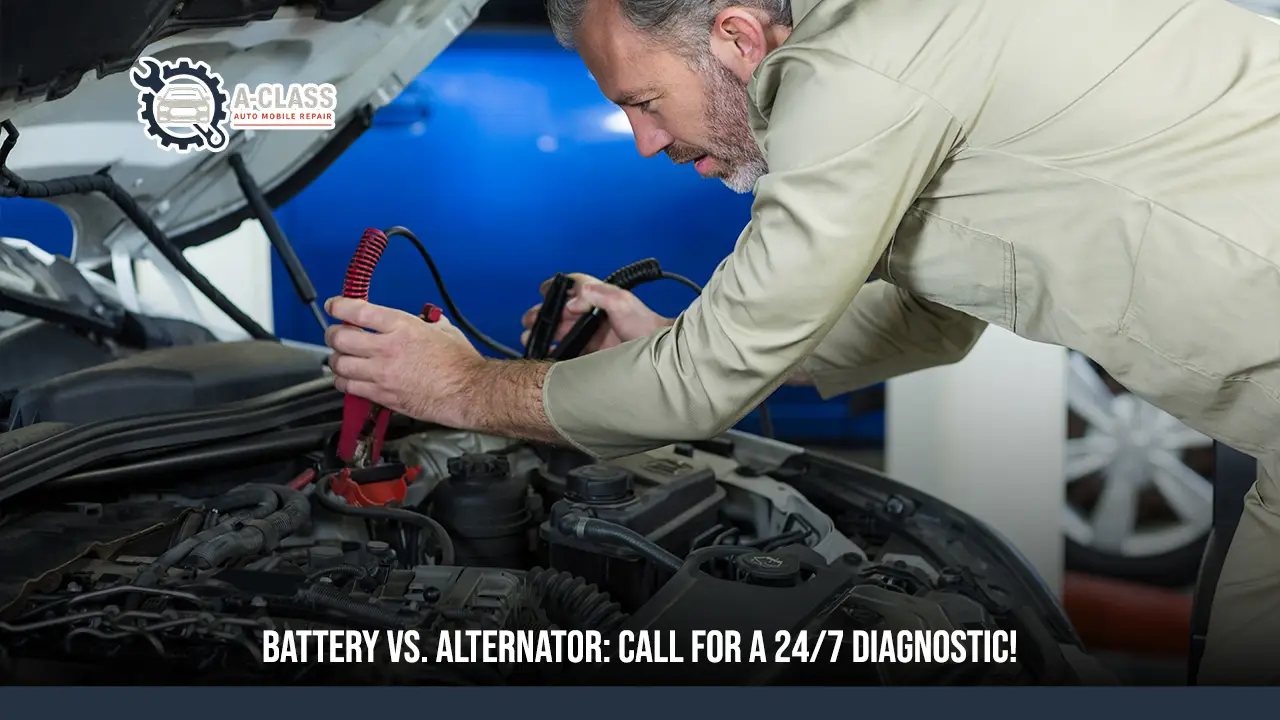
A quick way to tell is by jump-starting the car; if it runs and then dies shortly after, the alternator is likely the issue.
If the car continues running after the jump, the battery is usually the problem.
In short, the battery affects starting, while the alternator affects keeping the car running.
Car Won’t Start? Here’s What It Could Mean
When your car won’t start, it can be incredibly frustrating, but identifying the root cause often comes down to observing these specific warning signs:
- Complete Silence or Dim Lights: A dead battery is the most frequent culprit. Common dead battery causes include leaving lights on, an aging battery, extreme temperatures, or heavily corroded battery terminals that block the electrical current from flowing properly.
- Stalling After a Jump Start: If you manage to get the engine running using jumper cables but it dies the moment they are removed, this points directly to a bad alternator failing to charge the system.
- Rapid Clicking or a Single Loud Grind: Hearing a fast clicking noise means the battery is too weak to turn the engine, while a single, heavy clunk usually indicates a failing starter motor that needs replacement.
- Engine Cranks but Refuses to Fire: When the engine turns over normally but won’t actually run, you are likely dealing with fuel delivery problems like a clogged filter, an empty tank, or faulty spark plugs preventing combustion.
- Security and Mechanical Locks: Sometimes the issue is as simple as an engaged steering wheel lock, the vehicle not being fully shifted into Park, or a malfunctioning key fob failing to communicate with the immobilizer.
Bad Battery vs Bad Alternator (Key Differences)
| Symptom / Behavior | Bad Battery | Bad Alternator |
| Car won’t start | Very common | Rare |
| Car starts then dies quickly | No | Yes |
| Needs frequent jump start | Yes | No |
| Engine cranks slowly | Yes | No |
| Clicking sound when starting | Yes | No |
| Car stalls while driving | No | Very common |
| Dashboard battery light | Sometimes | Very common |
| Headlights dim or flicker | Sometimes | Very common |
| Electrical accessories fail | Rare | Yes |
| Burning smell or unusual noise | No | Possible |
What’s the Difference Between a Battery and an Alternator?
The main distinction lies in their roles: the battery serves as a chemical storage bank designed strictly to ignite the engine, whereas the alternator acts as a live power plant that produces electricity to run the vehicle and replenish the battery.
Simply put, your battery handles the electrical load when the car is parked, while the alternator takes over to power your lights, AC, and sensors once you hit the road.
Key Differences:
1. Function
- Battery: Functions as an electrical reserve. It delivers the heavy surge of voltage required to engage the starter motor and keeps your cabin electronics alive when the ignition is switched off.
- Alternator: Works as an ongoing electricity producer. It transforms the engine’s mechanical rotation into a steady electrical current, continuously powering the car’s systems and charging the battery at the same time.
2. Average Lifespan
- Battery: Because it depends on internal chemistry that naturally wears down over time, you can expect a standard battery to last around 3 to 5 years.
- Alternator: Designed as a heavy-duty mechanical assembly, it typically enjoys a much longer operational life, often running smoothly for 7 to 10 years before failing.
3. Failure Symptoms
- Bad Battery: Early warning signs include an engine that completely refuses to turn over, an extremely slow and heavy cranking sound, or interior dome lights that remain dark.
- Bad Alternator: Red flags appear when a jump-started vehicle dies immediately, headlights lose their brightness while you are driving, or the dashboard displays a persistent red battery icon mid-trip.
4. How They Work Together
Once the vehicle is in motion, the alternator becomes the sole provider of electricity. Should the alternator break down during your drive, the vehicle is forced to draw all its operating power directly from the battery. Since the battery is only built for short bursts of energy, it will drain out rapidly, leaving your car completely stalled on the road.
What Are the Clear Signs of a Bad Battery?
Figuring out the exact signs of bad battery vs bad alternator starts with checking your primary power storage for these five distinct red flags:
1. Slow Cranking and Clicking Noises
When turning your key, the engine might struggle heavily, making a prolonged and sluggish sound before finally catching and running.
If you hear a rapid series of clicks instead of a crank, it means the starter motor isn’t receiving enough voltage to initiate the combustion process.
2. Dim Interior Lights and Sluggish Accessories
Your dashboard illumination and cabin dome lights may appear noticeably faint, especially when the engine is merely idling in place.
Additionally, you might observe that power-hungry electrical components, like automatic windows, operate much slower than their normal speed.
3. Frequent Jump-Starts and Dashboard Warnings
Needing to connect jumper cables every morning is a prime indicator that the unit has internally failed and cannot retain its charge overnight.
The vehicle’s computer will also frequently trigger a dedicated red battery icon or a check engine light to alert you to this severe voltage drop.
4. Structural Damage and Visible Corrosion
Popping the hood might reveal a crusty, blue-green or white powdery buildup surrounding the metal posts, which physically blocks electrical flow.
Extreme under-hood temperatures during Houston summer driving conditions can also warp the plastic casing, causing it to bulge outward noticeably or emit a foul, sulfur-like odor.
5. Component Age and Sudden Failures
Most standard automotive power units rely on degrading chemical reactions, naturally reaching the end of their operational life within three to five years.
Be aware that in newer cars featuring automatic start/stop technology, this component can fail abruptly without giving you any prior slow-crank warnings.
Need a fast and reliable mobile mechanic in Houston Texas? A-Class Auto offers 24/7 mobile auto repair with 47+ expert mechanics & 8+ years of experience. Call now!
Call NowHow to Spot Alternator Failure Symptoms on the Road
To properly distinguish the signs of a bad battery vs bad alternator, you must pay close attention to these five specific warning signals while driving:
1. Engine Stalling and Starting Difficulties
Because a failing generator cannot supply enough continuous power to the ignition system, your car might unexpectedly shut off mid-drive.
This failure leaves your storage unit completely drained of energy, leading to a vehicle that stubbornly refuses to turn over after it stalls.
2. Pulsing Headlights and Dashboard Alerts
A highly unstable electrical output often causes your exterior headlights to flicker or pulse noticeably, especially while you are stopped in traffic.
Your dash might also light up erratically, displaying multiple unrelated warning icons like ABS and airbags at the same time, which are common electrical warning signs of deeper charging system issues.
3. Strange Mechanical Engine Noises
If the internal bearings are wearing out or the driving pulley is misaligned, you will hear a distinct whining or growling sound while the engine runs.
These rumbling noises originating directly from the engine bay are strong physical clues that the spinning mechanism is actively struggling to rotate.
4. Burning Smells and Intense Heat
An overworked internal system or a slipping drive belt generates a massive amount of severe, damaging friction under the hood.
This dangerous heat buildup typically releases a highly noticeable odor resembling burning rubber or melting electrical wires directly into the cabin.
5. Erratic Accessories and Low Voltage Readings
The absolute lack of continuously generated power causes high-draw features, like heated seats and sunroofs, to behave unpredictably or fail entirely.
Glancing at your dashboard voltmeter will likely confirm the ongoing issue, displaying erratic numbers or a steady reading well below the required 13V.
Bad Battery vs Bad Alternator (Key Differences)
To accurately differentiate the signs of a bad battery vs bad alternator, you must compare their fundamental behaviors and operational triggers:
1. Timing of the Power Failure
A failed storage unit primarily reveals itself before you even begin your trip by completely refusing to crank the engine from a parked position. Conversely, a faulty generator typically causes catastrophic power loss mid-journey, leading the vehicle to stall unexpectedly while you are actively driving.
2. The Jump-Start Verdict
Attaching jumper cables to a dead battery will successfully get the motor running and keep it going smoothly once the cables are disconnected. If the engine instantly dies the moment you remove those same cables, it proves the alternator cannot generate its own operational voltage.
3. Core Functional Roles
Think of the battery as a dedicated holding tank that strictly stores chemical energy specifically for the initial ignition sequence. The alternator serves as the active onboard power plant, producing fresh electrical current to run your accessories and recharge that holding tank.
4. Distinct Environmental Causes
Batteries frequently succumb to extreme weather fluctuations, natural chemical aging over several years, or accidentally leaving headlights illuminated overnight. Alternator breakdowns are almost always mechanical in nature, stemming from worn-out serpentine belts, severely overused internal bearings, or blown electrical diodes.
5. Electrical Behavior Under Load
When dealing with a dying battery, the vehicle simply struggles to initiate the heavy electrical draw required for the starter motor to turn over. A compromised alternator creates continuous instability while the car is running, causing active systems like radios and headlights to fluctuate or fail erratically.
How to Test Alternator vs Battery at Home
To confidently diagnose the signs of a bad battery vs bad alternator in your own driveway, grab a standard digital multimeter and follow these five diagnostic steps before considering professional engine diagnostics.
1. The Resting Voltage Check
Before attempting to start the vehicle, set your multimeter to the 20V DC range and place the metal probes directly onto the positive and negative terminals.
A fully charged, healthy power source should display a solid reading of 12.6 volts or more, while anything at 12.0 volts or lower points to a severely depleted cell.
2. The Active Charging Measurement
Fire up the engine and test the exact same metal posts once again to verify if the onboard electrical plant is successfully pushing fresh power into the system.
The numbers on the screen should comfortably rise between 14.2 and 14.7 volts; if the reading stays stubbornly below 13.5 volts, the generator is undeniably failing.
3. The Heavy Electrical Load Test
While the motor is actively running, force maximum electrical demand by switching on your high beams, blasting the air conditioning, and turning up the stereo.
If the multimeter display drops aggressively below the 13-volt mark and fails to recover under this stress, the charging unit cannot handle the vehicle’s actual power needs.
4. The Visual Headlight Observation
If you do not own testing equipment, start your car at night, switch on the headlights, and pay close attention to their brightness while the vehicle is idling in park.
If the beams appear incredibly dim at a standstill but suddenly shine much brighter the moment you press the gas pedal, your generator’s output is highly inconsistent.
5. Inspecting the Physical Connections
Never assume an internal component is completely dead without first checking the surrounding hardware, as a slipping drive belt can easily mimic a catastrophic failure.
Heavy dirt or thick corrosion surrounding the metal posts will also severely restrict the electrical flow, frequently leading to inaccurate test results and unnecessary replacements.
When to Replace Your Battery or Alternator
Deciding exactly when it is time to swap out components depends on properly interpreting the signs of a bad battery vs bad alternator through these five distinct indicators:
1. Struggling to Crank the Engine
The most obvious indicator that your energy storage is failing is a sluggish, heavy-sounding motor that takes significantly longer than usual to finally catch and run.
If turning the key only produces a rapid clicking noise with absolutely zero engine rotation, the unit lacks the necessary starting voltage and requires an immediate swap.
2. Exceeding Age Limits and Case Damage
Most standard automotive cells naturally degrade through basic chemical wear, typically losing their ability to hold a reliable charge after three to five years of daily use.
Furthermore, if extreme under-hood heat has caused the plastic housing to swell, bulge, or leak battery acid, the structural integrity is compromised and it must be replaced.
3. Persistent Stalling on the Road
A dead storage cell will leave you stuck in your driveway, but a failing generator will actually cause your vehicle to shut off completely while you are driving in traffic.
If the car abruptly dies mid-journey or immediately stalls out the second you remove jumper cables, the onboard charging system is fully exhausted and needs replacement.
4. Glitching Electrical Accessories
An exhausted generator struggles to supply continuous operating power, causing internal features like power windows and heated seats to behave with extreme sluggishness.
You may also notice your radio cutting out entirely or exterior headlights flickering erratically in direct response to the wildly fluctuating voltage levels while driving.
5. Dashboard Warnings and Burning Smells
Modern vehicles will clearly alert you to charging system failures by illuminating a red battery-shaped icon or an “ALT” warning light directly on the dashboard.
This specific warning is frequently accompanied by distinct mechanical grinding noises from the engine bay or a strong, pungent odor of burning rubber and hot electrical wires.
Final Verdict: Battery or Alternator?
Determining the exact cause of your electrical issues ultimately comes down to whether your car refuses to start initially or struggles to stay running on the road. Don’t risk getting stranded by guessing the wrong component and wasting money on unnecessary replacement parts. Bring your vehicle into A Class Auto today for a professional diagnostic test, or contact our mobile mechanic houston team, and let our expert mechanics safely get you back on the road!
FAQ: Signs of a Bad Battery vs Bad Alternator
How do I know if it’s my alternator or my battery?
If your car simply won’t start in your driveway, it is usually a dead battery. However, if the vehicle stalls completely while you are actively driving, the alternator is almost certainly the culprit.
Can A Class Auto test my alternator?
Yes, the expert technicians at A Class Auto can quickly and accurately test your entire electrical and charging system. They perform this diagnostic check efficiently to pinpoint the exact root of your power issue.
What are the first signs of alternator failure?
The earliest warnings are typically headlights that noticeably dim while idling, or a persistent red battery icon on your dashboard. You might also hear a faint whining noise coming directly from the engine bay.
Can A Class Auto test an alternator without removing it?
Absolutely; A Class Auto uses specialized diagnostic equipment to test your alternator and battery directly under the hood. You do not need to remove any parts to get a precise and reliable reading.