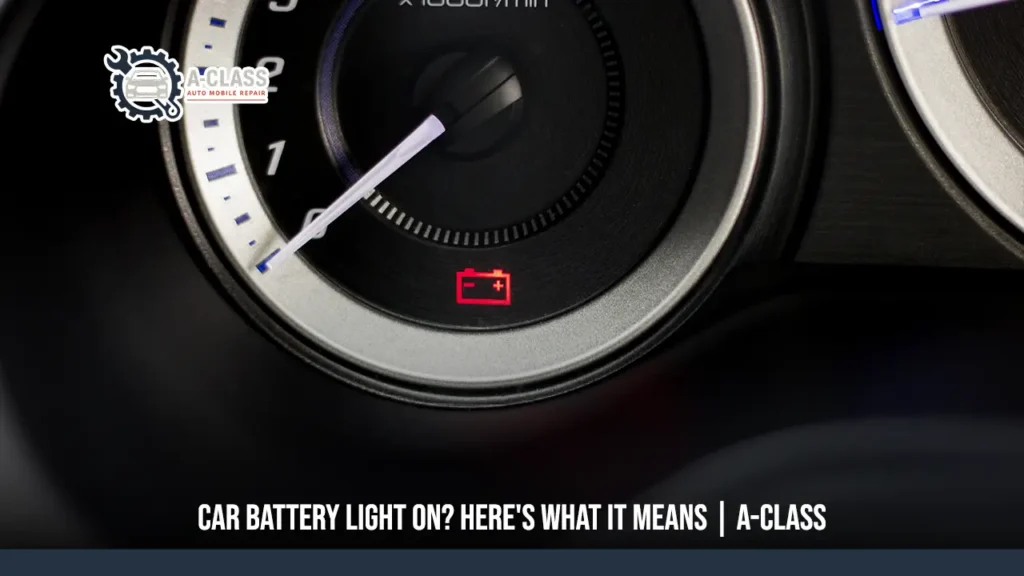
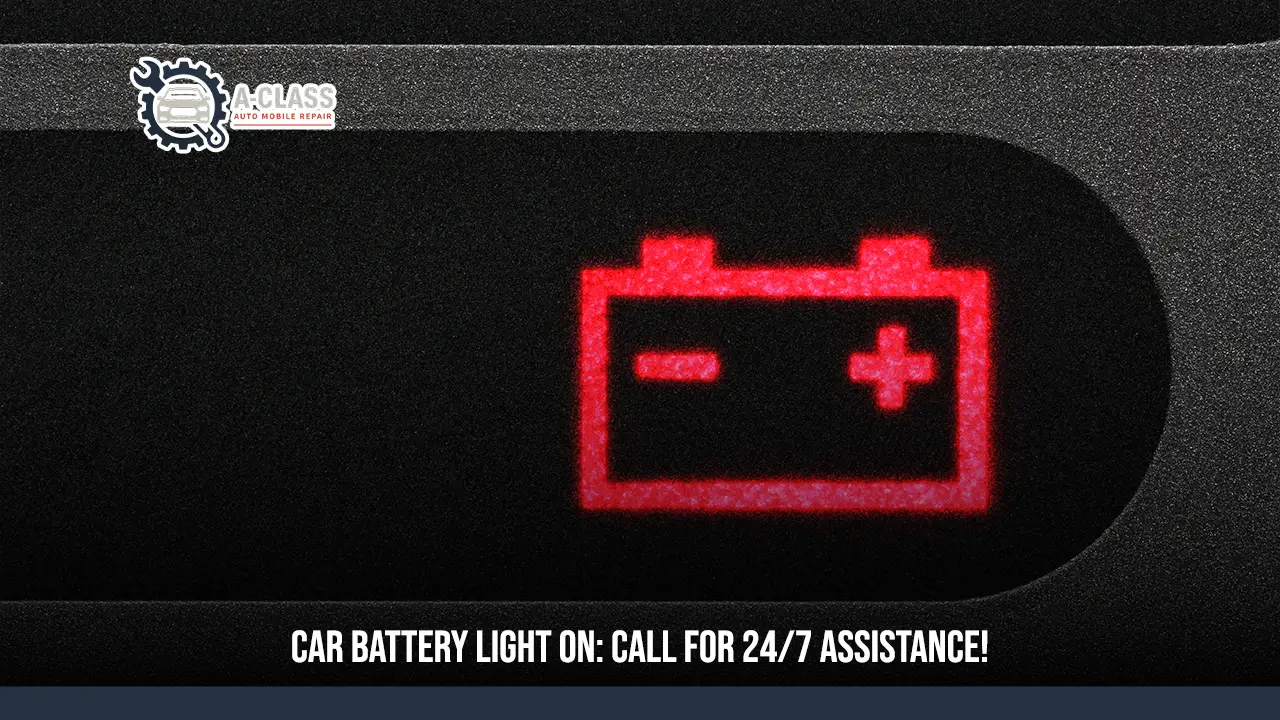
Car battery light on is a critical dashboard warning that usually indicates a failing charging system, such as a bad alternator or a broken belt, rather than just a dead battery. If this alert appears while driving, do not turn off your engine; immediately turn off non-essential electronics like the A/C and drive straight to a safe location. Before visiting a mechanic, you can perform basic DIY checks by cleaning corroded battery terminals, tightening loose clamps, and ensuring the serpentine belt is intact.
Why Is My Battery Light On? Hidden Causes You Should Know
If you are wondering about the hidden reasons behind your dashboard warning, several underlying factors could be the real obstacle. The most prominent causes are:
- Hidden Terminal Corrosion: Accumulation of white oxidation between the connecting cables and terminals prevents efficient current flow, making the vehicle’s computer falsely detect weak power.
- Damaged Ground Strap: The negative cable connected to the chassis can wear out or rust over time, breaking the electrical circuit and instantly triggering the alert.
- Blown Charging Fuses: A minor short circuit can easily blow the specific fuse responsible for the generator system, completely halting the charging process even if major parts are intact.
- Continuous Parasitic Drain: An aftermarket accessory or camera drawing an abnormally high amount of current can easily exceed the generator’s capacity to replenish the lost energy.
- Internal Cell Degradation: Natural aging destroys the internal lead plates, rendering them completely incapable of holding the energy sent by the generator regardless of its efficiency.
Battery Warning Light Meaning: What Your Dashboard Is Telling You
When you see the car battery light on, it is not just a surface-level alert but a precise message about systemic issues. These critical messages include:
1. Severe Voltage Drop
The internal computer detects a noticeable drop in voltage below the normal operating range, usually under 13.5 volts while the engine is running. This sudden drop warns you that the vehicle has started relying entirely on its backup power reserves.
2. Complete Connection Loss
The light often points to a sudden disruption in the data path between the generator and the electronic control unit. This communication break prevents the vehicle from regulating the exact amount of electricity needed to run efficiently.
3. Relying Solely on Reserve Power
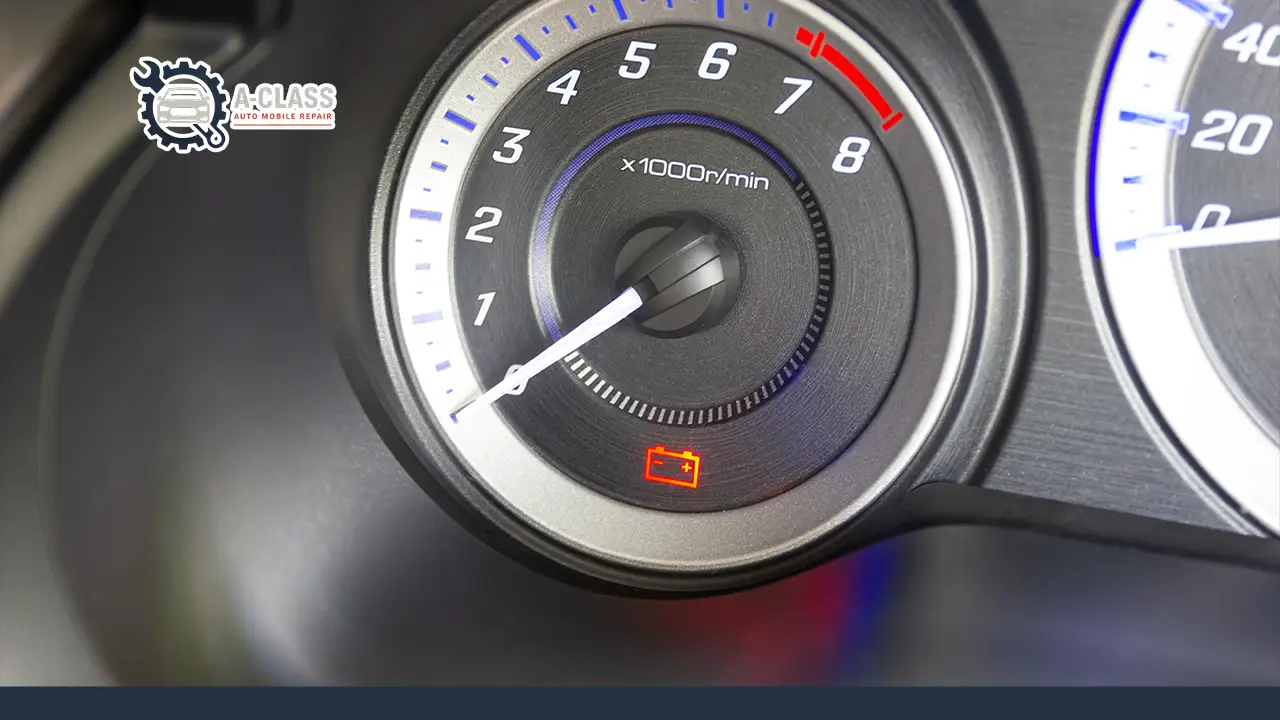
A solid red icon means power generation has ceased completely, and you are driving while draining the remaining stored energy. This is a highly critical emergency state that gives you a very limited window before the engine shuts down entirely.
4. Irregular Temperature Sensor Readings
Modern vehicles are equipped with temperature sensors, and the warning might indicate a dangerous spike in heat levels. This scenario requires an immediate physical inspection to prevent dangerous swelling or acid leakage under the hood.
5. General Electrical Instability Alert
The primary function of this symbol is to act as a comprehensive checkpoint showing that the balance between produced and consumed energy is compromised. The core message is that the system is highly unstable and needs urgent intervention before further breakdowns.
Battery Light While Driving: Is It Safe to Keep Going?
Seeing a battery light while driving always raises concerns and prompts questions about the safety of continuing your journey. Here are the main factors to consider:
- Loss of Steering Assist Systems: Driving in this state is extremely dangerous because modern vehicles rely on electric power steering, which will become incredibly heavy and almost impossible to control once power drops.
- Disabling Non-Essential Systems is Crucial: To secure a few extra miles, you must immediately turn off the air conditioner, screen, and radio, while avoiding electric windows to minimize current draw.
- Sudden Engine Stalling in Traffic: Continuing for long periods is highly discouraged because the absence of an electrical spark will eventually shut down the engine abruptly, risking a serious collision.
- Monitoring the Engine Temperature Gauge: Sometimes a snapped generator belt is also responsible for running the water pump, meaning continuing your trip will inevitably lead to severe engine overheating and destruction.
- Parking at the Nearest Safe Spot: As long as the warning remains visible, your remaining distance depends entirely on your current capacity, which rarely exceeds thirty minutes of very cautious driving before total collapse.
Charging System Warning Explained: What’s Failing in Your Car?
Having your car battery light on often points to a broader charging system warning indicating mechanical or technical wear. The failing components usually include:
1. Snapped or Loose Serpentine Belt
The rubber belt is the kinetic link that transfers engine power to operate the generator smoothly. A loose or broken belt prevents the sufficient rotation needed to produce the required electricity for all systems.
2. Defective Voltage Regulator
This delicate component directly controls the amount of current sent to replenish the power reserves. A failure here means either sending excessive charge that destroys cells or a weak charge insufficient for operation.
3. Frayed Wiring Harness
Harsh conditions and intense heat under the hood eventually cause the protective insulation on the wires to crack. This severe damage creates electrical shorts that abruptly stop the charging cycle from functioning safely.
4. Worn Pulley Bearings
The pulley on which the belt spins contains internal bearings that consume themselves over time. Their deterioration causes severe friction and resistance, reflecting as a clear failure in the power cycle.
5. Electronic Control Unit Glitches
In advanced vehicles, the electronic brain manages the entire charging process. Any software glitch or system freeze might suspend power generation commands until a full system reset is performed.
Alternator Light vs Battery Light: What’s the Difference?
Many drivers confuse the alternator light with the standard alert, but there are precise technical differences that explain the exact fault. These key distinctions are:
- The Source of the Alert Trigger: The standard light usually illuminates when the chemical unit fails to store energy, whereas the generator light turns on when the production unit itself fails to create any power.
- Variations in Dashboard Symbols: In some advanced dashboards, a solid icon denotes weakness, while the word “ALT” or a lightning bolt explicitly signals the complete collapse of the dynamic generation system.
- Sequence of Associated Failures: A generator failure immediately triggers multiple warning lights like ABS and Airbag due to sharp voltage drops, whereas a weak storage unit might show up completely on its own for a while.
- The Engine Speed RPM Test: If the warning disappears when you increase engine speed by pressing the gas pedal, it confirms the issue is a weak generator output at low speeds rather than a storage problem.
- Risk Levels to Other Components: The generator light means the vehicle might stall at any critical moment, while the isolated storage light often gives you a chance to restart or reflects the generator’s ability to keep the car running.
Top Reasons Your Battery Light Comes On Suddenly
Seeing your car battery light on suddenly while cruising safely is usually traced back to immediate emergencies requiring quick action. These sudden triggers include:
1. Fluid Leaks on the Generator
Driving through a deep puddle or having engine oil leak directly onto the generator coils causes an instant disruption in electromagnetic generation. This immediately triggers the dashboard alert in a fraction of a second.
2. Abrupt Breakage of Terminal Connectors
Strong vibrations from speed bumps or deep potholes can cause a sudden mechanical fracture in the connecting pins. The circuit disconnects instantly, and the bright warning appears forcefully on your screen.
3. Unexpected Excessive Electrical Loads
Activating additional accessories that consume massive power all at once, such as giant audio amplifiers with high beams, shocks the power system. The generator fails to meet this demand and sends an error signal.
4. Instantaneous Diode Burnout
Diodes are responsible for converting alternating current into direct current within the system. The sudden burnout of a single diode due to overheating halves the power output, setting off the alarm instantly.
5. Loosened Belt Tensioner
The specific part that maintains the tension of the engine belt might have its internal spring break suddenly. The belt loosens immediately, and the generator loses its required rotational speed to produce electricity.
What Happens If You Ignore the Battery Warning Light?
Ignoring this clear signal puts your vehicle and personal safety in direct danger. The catastrophic consequences of overlooking this alert include:
- Destroying Expensive Electronic Modules: Operating complex vehicle systems on highly unstable or low voltage leads to burning out the engine control unit and damaging transmission control circuits.
- Total Damage to the Electrical Generator: If the storage is weak and you ignore the issue, the generator will continuously work at maximum capacity trying to charge it, eventually burning itself out from the inside due to overexertion.
- Deactivation of Active Safety Systems: Airbags and anti-lock braking systems require stable power to function properly; ignoring the light means these crucial features will not protect you during a sudden accident.
- Burning Out the Fuel Pump: The gasoline pump needs continuous current to deliver fuel at the right pressure, and a voltage drop forces it to exert double the effort, leading to its breakdown and engine stall.
- Facing Extremely Dangerous Situations at Night: Driving and ignoring the light at night means your headlights will gradually dim until visibility drops to zero, making you highly vulnerable to collisions on dark roads.

Need a fast and reliable mobile mechanic in Houston Texas? A-Class Auto offers 24/7 mobile auto repair with 47+ expert mechanics & 8+ years of experience. Call now!
Call NowHow to Diagnose a Battery Light Problem Step by Step
You can efficiently track the root of the problem and find out why you have a car battery light on through a methodical inspection approach. The essential steps are:
1. Visual Inspection of Components
Begin by opening the hood and looking for any visibly severed parts, ensuring the rubber belt is fully intact. Pay close attention to any burning smells or signs of melting on the wires surrounding the main units.
2. Using a Digital Multimeter
Connect the multimeter to the terminals while the vehicle is completely turned off, which should read around 12.6 volts. This provides an immediate indication of the basic capacity to retain a charge properly.
3. Testing Readings While the Engine Runs
Start the engine and monitor the multimeter screen once more to check the output. If the reading jumps to between 13.5 and 14.5 volts, the generator is perfectly fine, but if it stays low, the generator is broken.
4. Gradual Load Testing
Turn on the air conditioner, high beams, and the radio simultaneously while the engine is running to observe the generator’s response. A sharp drop in voltage without recovery confirms a severe inability to handle high loads.
5. Checking Connections and the Fuse Box
Ensure the cables are tightly secured with a wrench so they cannot be moved by hand at all. Inspect the main fuse box carefully to ensure no primary fuse has melted and blocked the entire energy path.
Can a Bad Alternator Trigger the Battery Light?
Yes, absolutely, a damaged alternator is the most common reason for the alert, and its profound impact manifests through these specific issues:
- Alternating Current Ripple Leakage: When the generator’s rectifiers fail, they begin leaking alternating current into the direct current system, confusing the computer and illuminating the light instantly to protect sensitive modules.
- Worn Out Carbon Brushes: The internal components responsible for transferring current degrade mechanically, making their connection intermittent and causing the light to flicker repeatedly with engine vibrations.
- Failure to Meet Minimum Operating Thresholds: When the internal coils weaken, they barely provide enough power for the spark plugs while neglecting the charging cycle, prompting sensors to catch the flaw and send an alert.
- Disruption of the Internal Sensor Signal: Modern generators contain a dedicated wire to send the charging status directly to the dashboard. Burning this specific path turns the light on even if mechanical generation is perfectly fine.
- Thermal Breakdown of Components: Severe overheating due to a manufacturing defect or extreme overload melts the copper insulation inside, halting instantaneous production and triggering the warning alongside a distinct burning smell.
Simple Fixes When Your Car Battery Light Is On
Before visiting expensive repair shops to figure out why your car battery light on warning triggered, you can take quick, simplified steps to resolve the issue yourself:
1. Deep Cleaning of Calcified Terminals
Use a stiff wire brush and a mixture of warm water and baking soda to remove the crusty white layer. This incredibly simple step restores the current to its natural path and very often turns the light off immediately.
2. Tightening Loose Cable Connections
In many cases, the root cause is nothing more than a vibrating positive or negative cable. Use an appropriate wrench to tighten the nuts securely, ensuring there is absolutely no fluctuation in power transmission.
3. Applying Electrical Insulating Spray
After thoroughly cleaning and tightening the terminals, spray a thin layer of dedicated moisture and rust barrier. This prevents future salt formation and maintains a highly stable electrical connection to all circuits.
4. External Power Cycling
If your vehicle has been parked for a long period, use a smart external charger to slowly and gradually refill the cells. This process restores the natural acid density and ends the illusion of a weak system.
5. Performing a Full System Reset
Some vehicles retain the error code in their memory long after the issue is gone. Disconnect the negative cable for fifteen minutes then reconnect it, which is enough to clear phantom errors and shut off the light.
When Battery Light Means Serious Charging System Failure
Not all warnings are simple, as there are accompanying signs confirming you are facing a total collapse of the power matrix. This extreme danger is highlighted by:
- Loud Grinding and High-Pitched Whining Sounds: Hearing a metallic screeching noise or roughness from the engine belt area means the generator’s bearings are completely shattered and the part is about to mechanically detach.
- The Vehicle Entering Limp Mode: To aggressively prevent engine destruction, the computer cancels throttle response and locks the speed at a very low limit to force you to pull over at any cost.
- Rapidly Dimming and Flickering Headlights: If you notice the front illumination fading terrifyingly and almost turning off with every brake press, it is definitive proof that the last drop of remaining power is gone.
- Dashboard Lighting Up Like a Christmas Tree: The simultaneous ignition of all warning symbols, including traction control and engine heat, reflects electronic chaos due to voltage dropping below the microprocessors’ operational limits.
- Clearly Smelling Burning Rubber: This pungent odor almost always means the generator pulley has seized entirely while the rubber belt still attempts to move with engine force, causing friction smoke and burning.
Seeing your car battery light on is a critical dashboard warning that requires immediate attention to prevent sudden roadside breakdowns and highly expensive electronic repairs. By understanding the underlying causes and acting swiftly, you can successfully protect your vehicle’s complex electrical matrix and ensure a completely safe journey.
If you are unsure about inspecting the high-voltage electrical components yourself, schedule a comprehensive diagnostic check with a certified mechanic today to keep your car running smoothly.
Signs Your Charging System Is Failing Before Breakdown
Fortunately, vehicles send smart hints before leaving you stranded on the side of the road. The most prominent early warning signs of an impending disaster are:
1. Extremely Sluggish Window Movement
If you notice the vehicle’s glass rolling up and down with unusual and noticeable difficulty, this is the first indicator that the generator is not providing enough power to small, scattered electric motors.
2. Continuous Stuttering in the Infotainment System
The interior screen turning off suddenly or the audio player rebooting itself automatically while driving reflects a severe flaw in voltage stability, which confuses highly current-sensitive devices.
3. Repeated Difficulty During Morning Starts
An engine that stutters, hesitates, or delays turning over when started after a long rest clearly indicates that the generator failed to adequately recharge the cells during the previous day’s commute.
4. Illogical Fluctuation in Gauge Lighting
A visible shaking or flickering in the illumination of the dashboard numbers, perfectly synchronized with changes in engine RPM, proves the voltage regulator’s weakness and inability to absorb power differences.
5. Gradual Disabling of Luxury Functions
The smart vehicle systems will intervene to cut power to the heated seats first, followed by the air conditioning system, to aggressively save whatever power remains to keep the engine running smoothly.
Frequently Asked Questions about car battery light on
Can you drive your car with the battery light on?
While you technically can drive for a very short distance, it is highly unsafe and strongly discouraged. When this warning illuminates, your vehicle relies entirely on stored reserve power, which typically depletes within twenty to thirty minutes, ultimately leading to a sudden engine stall and complete loss of power steering in the middle of the road.
Does battery light always mean alternator?
No, it does not always mean the alternator has completely failed, even though it is the most common culprit. This specific warning can also be triggered by a snapped serpentine belt, heavily corroded terminal connections, blown system fuses, or even a severely degraded cell that simply cannot hold the charge it receives.
Why is my battery light on but my car is running fine?
Your car may seem to run perfectly fine temporarily because the engine is currently feeding off the remaining electrical energy stored in the battery rather than the alternator’s live output. However, once that highly limited stored energy is completely drained, the vehicle’s essential systems will abruptly shut down without any further notice.
How to fix battery warning light?
You can start your troubleshooting by safely cleaning the terminals with a wire brush, ensuring all primary cable connections are incredibly tight, and visually inspecting the drive belt for obvious tears. If these immediate DIY fixes do not clear the dashboard alert, you must use a digital multimeter to test the live voltage or visit a professional repair shop for a deep system scan.