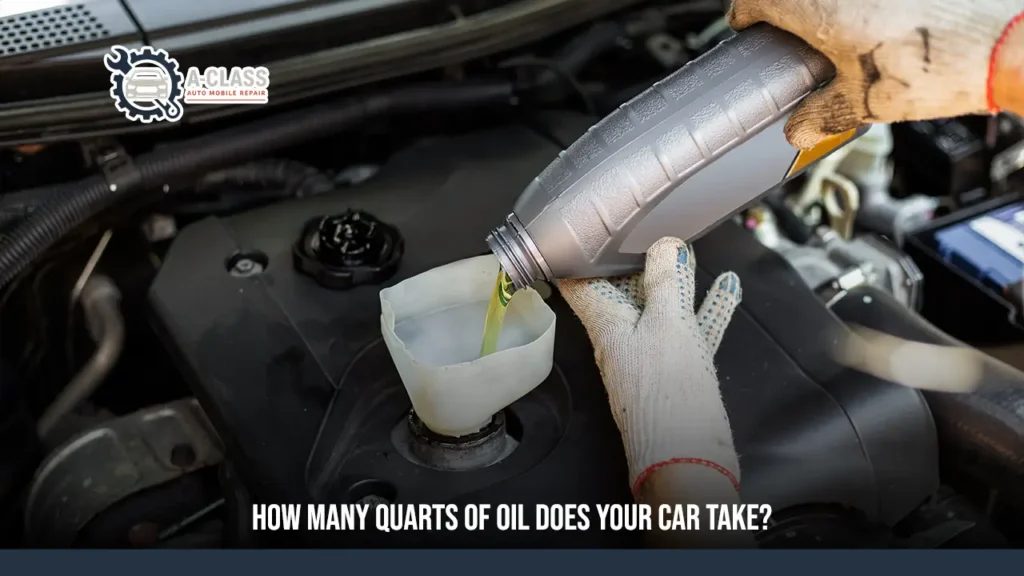
Most passenger cars require between 4 and 6 quarts of engine oil, though this depends heavily on the engine size. Smaller 4-cylinder engines usually take 3 to 5 quarts, while larger V6 and V8 engines typically need 5 to 8 quarts. Always consult your owner’s manual for the exact capacity, as overfilling can damage the engine just as much as underfilling.
What Is a Quart of Engine Oil?
A quart of engine oil is a unit of volume measurement equal to 32 U.S. fluid ounces or approximately 946 milliliters (0.946 liters). In the United States, motor oil is sold primarily in 1-quart bottles.
It is important to note that 1 U.S. Quart is slightly less than 1 Liter. So, when considering how many quarts of oil does a car take, keep in mind:
1 Quart = 0.946 Liters
- 5 Quarts = 4.73 Liters
If your car requires 5 liters of oil, buying 5 quarts will result in a slight underfill, so checking the exact volume on the bottle is essential.
How Many Quarts of Oil Does a Car Take?
Most modern passenger cars take between 5 to 8 quarts of engine oil.
The exact amount depends specifically on the size of the engine and the vehicle type.
- Small Sedans: Typically require 4 to 5 quarts.
- Medium SUVs & Trucks: Usually require 5 to 7 quarts.
- Large Trucks & High-Performance Engines: Can take 8 quarts or more.
Always consult your owner’s manual for the precise specification, as overfilling or underfilling can cause severe engine damage. If you are unsure of your levels while on the move, our roadside assistance team can help verify and top off your fluids safely.
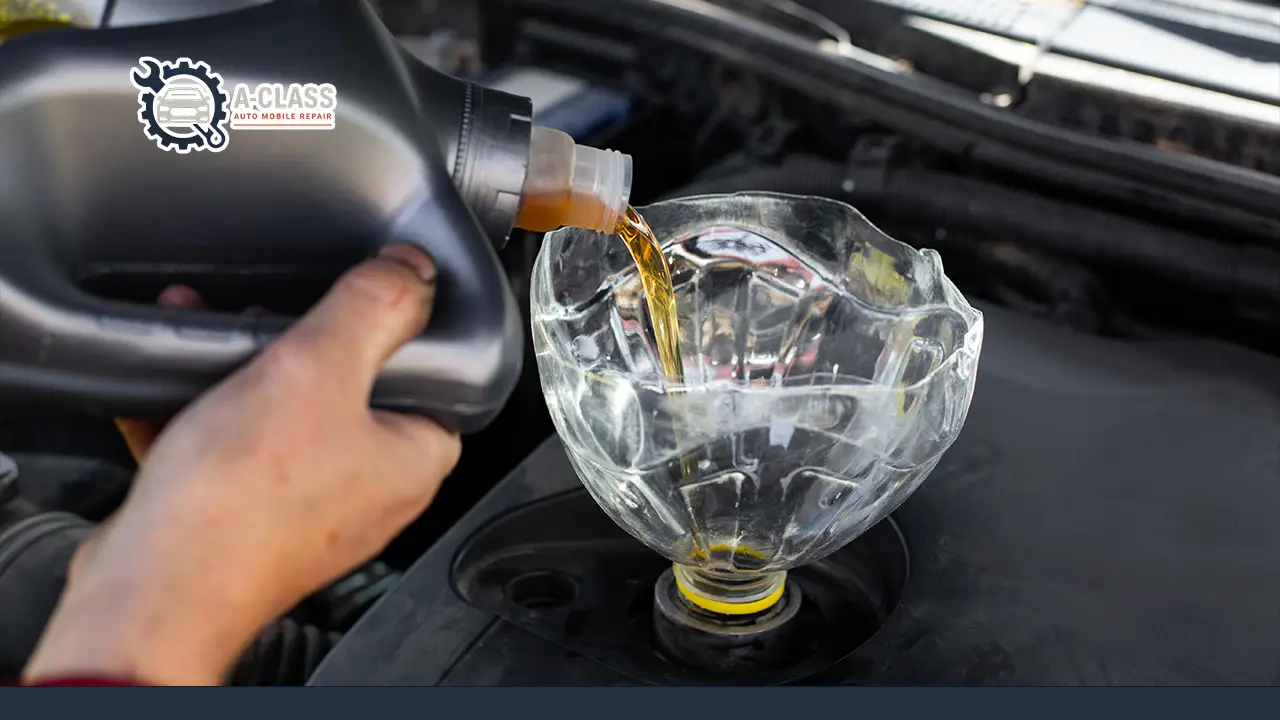
Oil Capacity by Engine Size
The number of cylinders in your engine is the most reliable indicator of oil capacity.
Larger engines have more internal surface area and moving parts, requiring a higher volume of oil for lubrication and cooling.
- 4-Cylinder Engines: Generally require 4 to 5 quarts of oil.
- 6-Cylinder Engines (V6): Typically need 5 to 6 quarts of oil.
- 8-Cylinder Engines (V8): Usually demand 5.5 to 7.5 quarts (or more for diesel variants).
Does Oil Filter Change Affect Oil Quantity?
Yes, changing the oil filter directly increases the amount of oil required. The oil filter itself holds a significant volume of oil (typically 0.4 to 1 quart, depending on size).
- If you change the filter: You must fill the engine to its full specified capacity (e.g., 5 quarts).
- If you do NOT change the filter: You will likely need 0.5 quarts less than the manual specifies, as old oil remains trapped inside the used filter.
Recommendation: Always replace the oil filter with every oil change to ensure clean oil circulates through the engine.
Checking Oil Level After Filling
To ensure how to check oil level in car, follow these precise steps. Checking immediately after pouring will give a false reading because the oil has not yet drained into the oil pan.
- Park on Level Ground: Ensure the vehicle is flat to get an accurate reading.
- Run the Engine Briefly: Start the car for 30 seconds to circulate oil into the filter, then turn it off.
- Wait 5-10 Minutes: Allow the oil to drain back down into the sump (oil pan).
- Check the Dipstick:
- Pull out the dipstick and wipe it clean.
- Reinsert it fully, then pull it out again.
- The oil mark should be between the “MIN” and “MAX” lines (or the crosshatched area).
Need a fast and reliable mobile mechanic in Houston Texas? A-Class Auto offers 24/7 mobile auto repair with 47+ expert mechanics & 8+ years of experience. Call now!
Call NowOil Capacity by Engine Size
As a general rule:
- 4-Cylinder Engines: Take about 3.5 to 4.5 quarts.
- 6-Cylinder Engines (V6): Take about 4.5 to 6 quarts.
- 8-Cylinder Engines (V8): Take about 5.5 to 7.5 quarts.
Common Oil Filling Mistakes
Avoiding these common errors is critical for engine longevity:
- Overfilling: Adding too much oil causes the crankshaft to whip the oil into foam (aeration). Foamy oil cannot be pumped effectively, leading to low oil pressure and potential engine damage.
- Underfilling: Running the engine with low oil causes excessive friction and overheating, which can seize the engine.
- Checking Too Soon: Checking immediately after pouring gives a false low reading because the oil hasn’t drained down yet.
- Wrong Viscosity: Using 10W-30 when your car requires 0W-20 can reduce fuel economy and prevent proper lubrication during cold starts.
Ensuring your engine has the correct amount of oil is one of the simplest yet most critical maintenance tasks you can perform. Whether your vehicle requires 4 quarts or 8 quarts, sticking to the manufacturer’s specifications is the key to avoiding overheating, friction damage, and and costly engine repair.
Always remember to account for the oil filter and check your dipstick for the final verification.
Need Professional Help? If you want to ensure your vehicle receives the highest standard of care, we highly recommend mobile mechanic houston tx. Their team of certified experts specializes in precise oil changes and comprehensive engine maintenance, ensuring your car runs smoothly and efficiently. Trust A-Class Auto for reliable service that keeps your engine in peak condition.
Frequently Asked Questions
What Is a Quart of Engine Oil?
A quart of engine oil is a unit of volume equal to 32 fluid ounces or approximately 0.946 liters. It is slightly less than a liter. Most standard oil bottles sold in the US contain exactly 1 quart.
How Many Quarts of Oil Does a Car Take?
Most modern vehicles require between 4 and 6 quarts of engine oil, though larger engines (V8s or trucks) can take up to 8 quarts or more. Always check your owner’s manual for the exact specification.
Does Oil Filter Change Affect Oil Quantity?
Yes. The oil filter holds about 0.5 quarts of oil. If you change the filter (which is recommended), you will need to add slightly more oil to reach the full capacity. If you do not change the filter, add about 0.5 quarts less than the manual states.