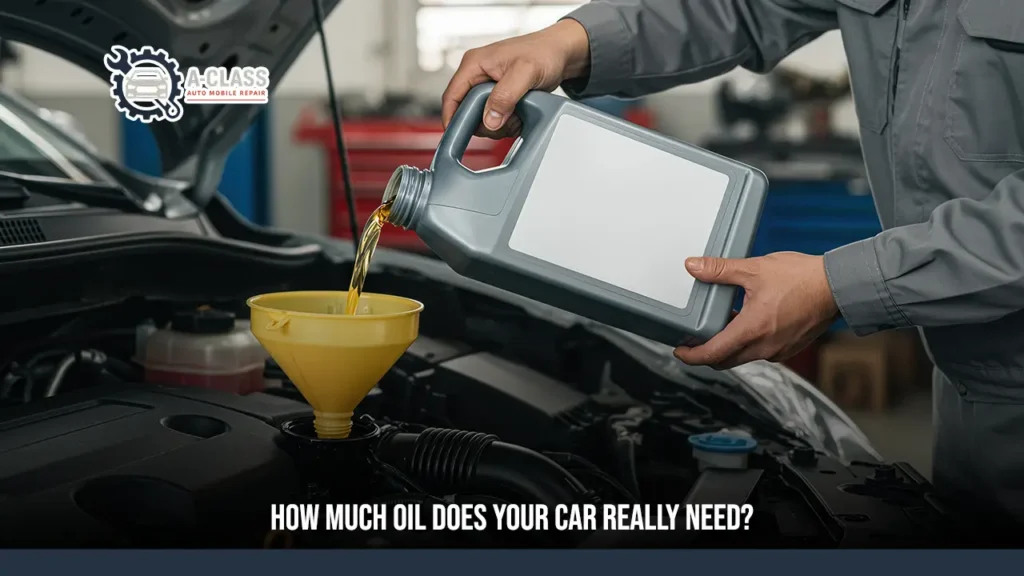
Most passenger cars require between 4 and 6 quarts of engine oil (around 3.7 to 5.7 liters), although the exact amount depends on the engine type and manufacturer specifications. Generally, 4-cylinder engines use about 4–5 quarts, 6-cylinder engines need 5–6 quarts, and V8 engines may require 7–8 quarts or more.
If you’re wondering how much oil does my car need?, we are introducing everything you need to know about engine oil capacity to help you choose the right amount and avoid engine damage during your next oil change.
Why Oil Capacity Matters for Your Engine?
Proper oil capacity helps protect your engine, improve performance, and reduce long-term wear. Using the correct amount of oil is essential for keeping all engine components working efficiently.
- Lubrication: Helps reduce metal-to-metal friction between moving engine parts.
- Temperature Control: Assists in lowering engine heat and preventing overheating.
- Engine Protection: Minimizes wear, sludge buildup, and internal damage over time.
- Fuel Efficiency: Proper oil levels help the engine run smoother and more efficiently.
- Longer Engine Life: Correct oil capacity supports better long-term reliability and performance., as supported by the SAE International Engine Oil Viscosity and Fuel Economy Study.

How to Estimate Engine Oil Capacity Based on Engine Size?
Understanding your car oil capacity is essential for proper maintenance, especially during oil changes or topping up oil levels. Adding the right oil amount for car ensures engine longevity, optimal performance, and fuel efficiency. This guide will walk you through everything you need to know about engine oil capacity, how to find it, and how to add oil correctly.
One of the easiest ways to estimate how much oil does my car need is by looking at engine size. Larger engines typically require more oil, while smaller engines use less.
Small Engines (1.0L to 1.6L)
Small engines usually require between 3 to 4.5 quarts (2.8 to 4.3 liters) of oil. These engines are commonly found in compact cars and economy vehicles.
Medium Engines (1.8L to 3.0L)
Medium-sized engines typically need 4.5 to 6 quarts (4.3 to 5.7 liters) of oil. This range is common in sedans, SUVs, and crossovers.
Large Engines (3.5L and Above)
Large engines, including V6, V8, and high-performance engines, may require 6 to 10 quarts (5.7 to 9.5 liters) or more. Trucks and performance vehicles often fall into this category.
While engine size provides a general guideline, it is not a substitute for checking your vehicle’s specific engine oil capacity
How to Check Your Engine Oil Level Correctly?
Before deciding how much oil to add, you need to accurately check the current level. Many drivers search how much oil does my car need, but the correct answer always starts with proper measurement.
Park the Vehicle
- Stop the car on a flat and stable surface
- Turn off the engine completely
- Wait a few minutes so oil settles in the pan
Use the Dipstick
- Pull out the dipstick carefully
- Clean it using a cloth or tissue
- Reinsert it fully back into place
Read the Level
- Pull it out again after reinserting
- Observe the oil marking on the stick
- Identify whether the level is low, normal, or high
This step is essential to understand your actual engine oil capacity before adding any oil.
Signs of Incorrect Engine Oil Levels
When the car oil capacity is not properly maintained, the engine will always show early warning signs that should not be ignored.
Low Oil
- Noise:Engine starts producing knocking or ticking sounds
- Heat:Temperature rises faster than normal
- Warning:Oil warning light appears on the dashboard
- Power:Engine feels weaker during acceleration
Excess Oil
- Smoke:Exhaust releases blue or white smoke
- Smell:Burning smell becomes noticeable
- Operation:Engine runs roughly or inconsistently
- Pressure:Internal pressure increases abnormally
If these symptoms appear, you should immediately check how much oil to add to car instead of continuing to drive.
Recommended Oil Type vs Oil Capacity
| Engine Size | Oil Requirement | Typical Use Case |
| Small engines | 3–4.5 liters | Compact cars, economy vehicles |
| Medium engines | 4.5–6 liters | Sedans, SUVs, crossovers |
| Large engines | 6–10+ liters | Trucks, performance cars |
Common Mistakes to Avoid When Adding Engine Oil
- Estimation: Many drivers try to guess instead of measuring, which leads to incorrect filling and confusion about how much engine oil do i need.
- Overfilling: Adding too much oil increases pressure inside the engine, which can cause leaks, smoke, and long-term damage.
- Wrong Oil Type: Using oil that doesn’t match specifications reduces lubrication efficiency and affects engine performance.
- Ignoring Measurements: Skipping dipstick checks leads to inaccurate levels and can result in serious engine issues over time.
Need a fast and reliable mobile mechanic in Houston Texas? A-Class Auto offers 24/7 mobile auto repair with 47+ expert mechanics & 8+ years of experience. Call now!
Call NowHow to Find Your Vehicle’s Exact Engine Oil Capacity?
If you want an accurate answer to how much oil does my car need, always check the manufacturer’s specifications and regularly monitor the oil level in car for proper engine performance.
Owner’s Manual
The owner’s manual is the most reliable source for car oil capacity. It lists the exact oil amount, oil type, and recommended change intervals.
Under the Hood Label
Some vehicles have an oil capacity label under the hood, providing quick reference information.
Manufacturer Website
Many car manufacturers provide digital manuals online, making it easy to look up how much oil to add for your specific model.
Professional Service Centers
If you are unsure, a professional mobile mechanic houston tx can check your vehicle and ensure the correct oil amount for your car, saving you time and preventing costly mistakes.
Engine Oil Capacity Differences
Understanding the difference in engine oil capacity between small and large engines helps drivers make better maintenance decisions.
Small Engines
Small engines require less oil, which means:
- Lower oil change costs
- Faster warm-up times
- Less environmental impact
However, small engines can be more sensitive to low oil levels, so monitoring how much oil does my car need is essential.
Large Engines
Large engines require more oil due to:
- More moving parts
- Higher operating temperatures
- Greater internal volume
While large engines are powerful, maintaining proper car oil capacity is critical to avoid performance issues and expensive repairs and to know how much oil does my car need.
What Happens If You Add Too Much or Too Little Oil?
Adding the wrong oil amount for car can lead to serious consequences.
Too Little Oil
If you add less oil than required:
- Engine parts may not receive proper lubrication
- Increased friction can cause overheating
- Accelerated wear may lead to engine failure
- Oil pressure warning lights may appear
Driving with low oil is one of the fastest ways to damage an engine.
Too Much Oil
Overfilling oil can be just as harmful:
- Excess oil can create foam, reducing lubrication effectiveness
- Increased pressure may damage seals and gaskets
- Oil leaks can cause oil to enter the combustion chambers and lead to smoke from the exhaust.
- Catalytic converters can be damaged
Always follow recommended engine oil capacity to avoid these issues to know how much oil does my car need.
Oil Capacity When Changing Oil Filter
When changing the oil filter, the required oil amount for car slightly increases. This is because the new filter needs to be filled with oil.
Typically, adding 0.2 to 0.5 quarts (0.2 to 0.5 liters) extra oil is necessary when replacing the filter. Always check the manual for the exact how much oil to add when changing both oil and filter.
Professional oil change services like A-Class Auto ensure the correct oil volume is added and the filter is properly installed, reducing the risk of leaks or incorrect oil levels.
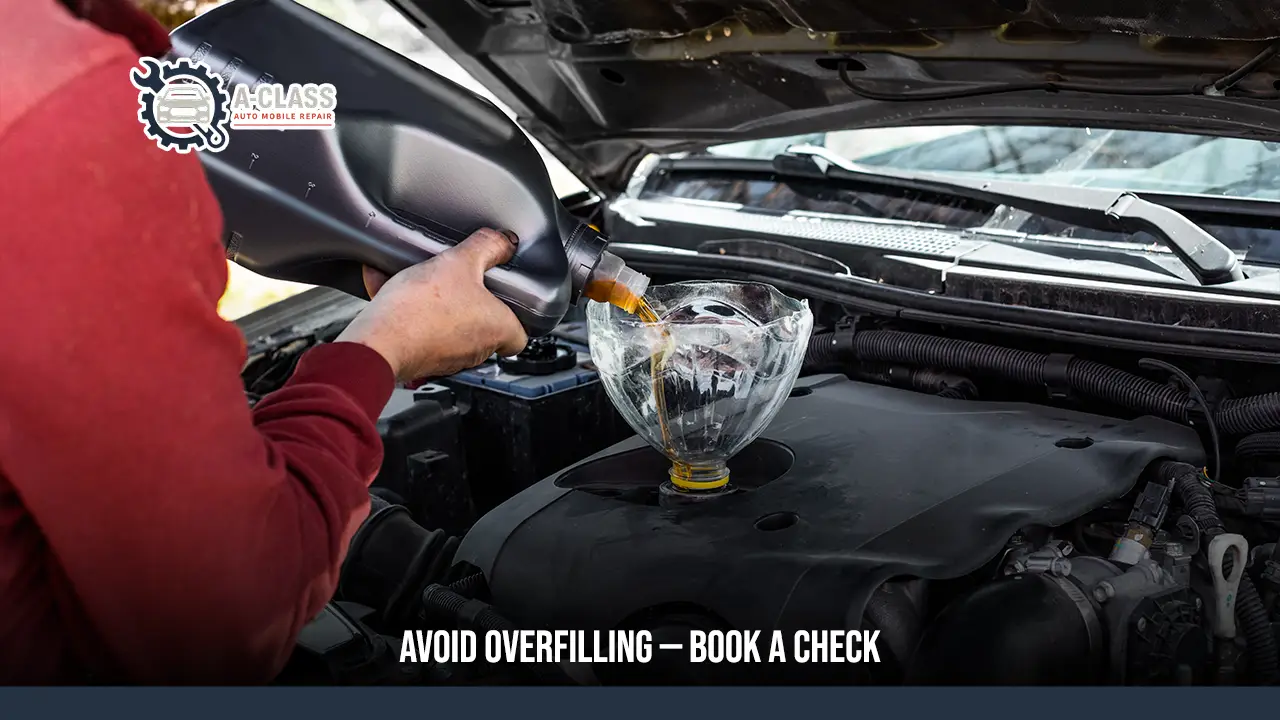
Tips for Filling Engine Oil Accurately and Safely
How much oil does my car need? Adding oil correctly ensures your engine runs efficiently and safely. Follow these tips for accurate oil filling:
- Park your car on a level surface before checking oil
- Use the dipstick to monitor oil levels
- Add oil gradually and recheck levels
- Use the recommended oil type and viscosity
- Avoid overfilling beyond the maximum mark
- Check oil levels after driving and after the engine cools down
If you are unsure about how much oil does my car need, consult a professional mechanic or trusted service provider.
FAQs About engine oil capacity
How much oil does my car usually need?
Most cars need between 4–6 quarts (3.8–5.7 liters), but the exact amount depends on engine size and manufacturer specifications. Always confirm for your specific vehicle.
Does changing the oil filter affect oil amount?
Yes. It usually requires a small extra amount of oil because the new filter gets filled during installation.
Can I guess oil capacity without checking the manual?
No. Estimating can easily lead to overfilling or underfilling, so the owner’s manual is always required.
Is it safe to drive with low engine oil?
No. Low oil can quickly cause overheating, increased friction, and serious engine damage.
How do I correctly check my engine oil level?
Park on a flat surface, turn off the engine, wait a few minutes, then use the dipstick to check the level accurately.