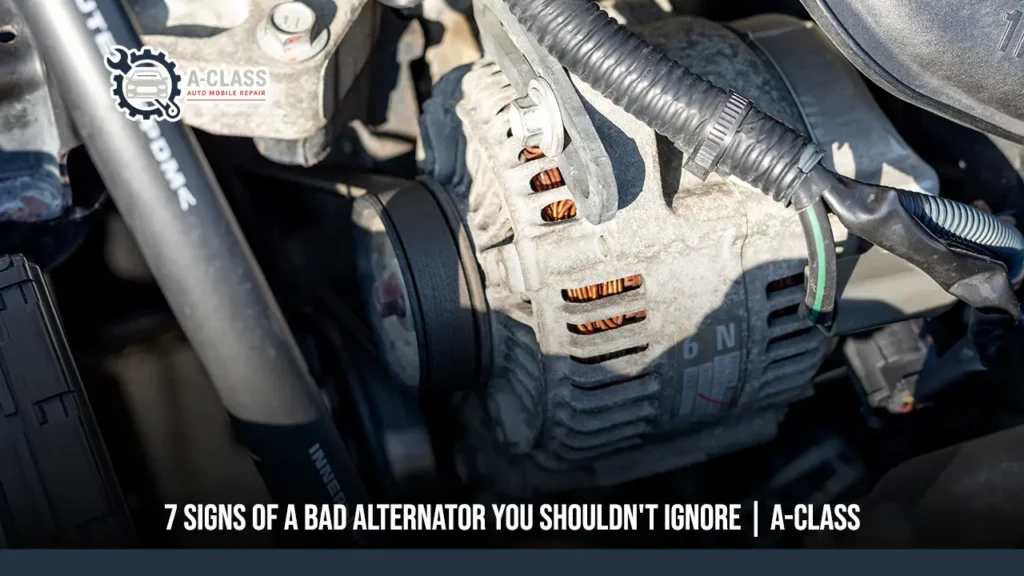
The signs of a bad alternator usually begin with dim headlights, electrical malfunctions, dashboard battery warnings, and difficulty starting the engine. As the charging system weakens, drivers may also notice flickering lights, strange grinding noises, or sudden engine stalling while driving. This guide explains the most common alternator failure symptoms, their main causes, how to test the charging system, and the warning signs you should never ignore.
What Causes Alternator Failure in Cars?
Understanding the root of the problem is essential, so identifying alternator failure symptoms is key to understanding the main causes behind it.
1. Worn Out Alternator Belt or Loose Serpentine Belt
The alternator relies entirely on this rubber belt to spin its internal rotor and generate power for the car. If this belt becomes stretched, loose, or glazed over time, it will simply slip and fail to turn the alternator fast enough.
Furthermore, extreme engine heat and age can cause the rubber material to dry out, crack, and eventually snap completely. When this happens, the charging system stops immediately, and you will likely lose power steering as well.
2. Faulty Voltage Regulator Issues
This small but crucial component acts as the brain of the charging system, ensuring the output remains steady at around 14 volts. It regulates the electrical flow so that the battery gets exactly what it needs regardless of the engine speed.
If the regulator gets stuck closed, it will push too much voltage into the system, potentially frying your sensitive electronics. Conversely, if it fails open, it will completely block the power flow, leaving your car running solely on the battery.
3. Bad Wiring or Corroded Connections
Even a perfectly functioning alternator cannot do its job if the electrical pathway to the battery is blocked by severe corrosion. White or green powdery buildup on the terminals creates high resistance, forcing the unit to overwork and overheat.
Additionally, a blown high-amp fusible link or a loose engine ground strap will completely break the electrical circuit. Always ensure these connections are clean, tight, and secure before assuming the entire charging unit needs replacement.
4. Internal Component Wear and Tear
Inside the housing, small carbon brushes constantly rub against a spinning metal shaft to safely conduct the generated electricity. After thousands of miles of driving, these brushes naturally wear down until they no longer make physical contact.
At the same time, the internal bearings that allow the rotor to spin smoothly can degrade and lose their lubrication over time. This usually produces a harsh grinding noise alternator symptom right before the internal mechanisms completely seize up and stop moving.
5. Dangerous Engine Fluid Leaks
Fluid contamination from engine oil or power steering leaks is a silent but highly destructive killer for charging components. When these thick liquids drip directly onto the alternator housing, they seep inside and coat the sensitive copper coils.
This sticky residue not only gums up the moving brushes but also acts as an insulator that traps massive amounts of heat. The resulting temperature spike will quickly melt the internal wiring and cause a catastrophic failure of the entire unit.
6. Overloaded Electrical System
Running too many aftermarket electronics such as powerful amplifiers, auxiliary lights, or winches can overload the charging system. This constant excessive demand forces the alternator to work beyond its intended capacity, eventually overheating the internal components and shortening its lifespan.
7. Excessive Heat and Age
Over time, continuous exposure to extreme engine heat naturally degrades the alternator’s internal wiring, bearings, and electronic components. These overheating issues are also common signs your car needs a tune-up before complete electrical failure occurs. Older alternators are far more likely to fail unexpectedly due to years of wear and thermal stress under the hood.
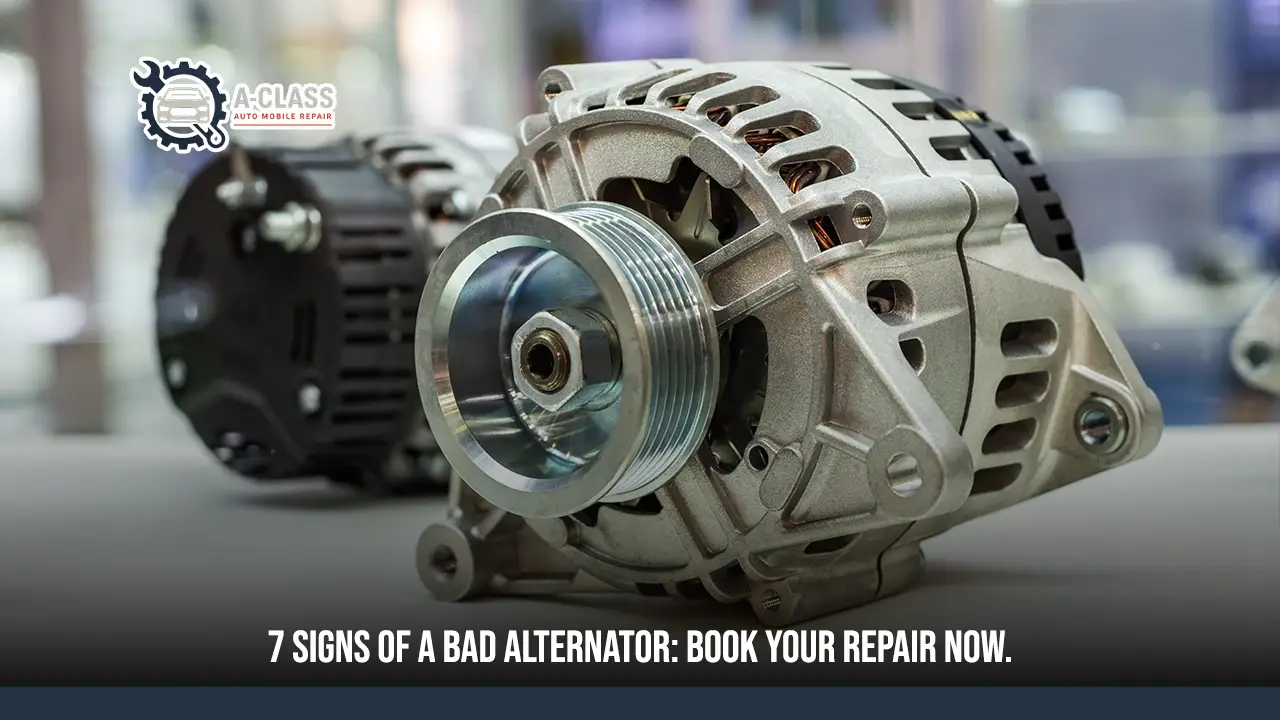
How to Test an Alternator Without a Mechanic?
Before panicking over the signs of a bad alternator, you can easily check your electrical system at home using these simple methods or schedule a professional car diagnostics service to identify hidden charging system problems early.
- Using a Multimeter to Check Alternator Output Voltage: Set your device to 20V DC and test the battery terminals while the engine is running; a healthy system should display steadily between 13.5 and 14.5 volts to prove it is charging.
- Checking Battery Voltage Before and After Starting: Before turning the key, a fully charged battery should read exactly 12.6 volts; if the number drops below 12 volts, it is deeply discharged and must be charged before testing the alternator.
- Performing a High Electrical Load Test: Turn on your high beams, air conditioning, and radio while the engine idles; the multimeter reading might dip slightly but should always remain steadily above 13 volts if the unit is strong.
- The Magnetic Screwdriver Method: Very carefully hover a metal screwdriver near the center bolt of the spinning alternator pulley; if you feel a strong magnetic pull, it confirms the internal rotor is actively generating a magnetic field.
- The Classic Headlight Fluctuation Check: Park facing a dark wall at night, turn on your headlights, and gently rev the engine; if you notice a flickering lights car issue where the beams get noticeably brighter when you accelerate and dim when you let off the gas, the voltage is inconsistent.
Need a fast and reliable mobile mechanic in Houston Texas? A-Class Auto offers 24/7 mobile auto repair with 47+ expert mechanics & 8+ years of experience. Call now!
Call NowKey Signs to Tell If It Is the Battery or Alternator
Figuring out which part is actually broken can be tricky, but here are the defining clues to identify the bad alternator warning signs:
1. The Jumpstart Survival Test
When you jumpstart a completely dead car, the engine should technically stay running on its own after you remove the cables. This happens because a healthy charging system instantly takes over the electrical load from the battery.
However, if the engine immediately dies the second you disconnect the jumper cables, the alternator is completely dead. It simply cannot sustain the vehicle’s electrical needs without the external battery’s help.
2. Evaluating Dashboard Warning Lights
A failing battery rarely triggers a dashboard warning on its own while you are actively driving down the highway. The computer assumes the battery is just a storage box and relies on the alternator for running power.
On the other hand, a dying charging system will immediately illuminate the red battery icon or battery light on dash as soon as voltage drops. This is your car’s way of telling you that it is currently losing power while moving.
3. Observing the Dimming Interior Lights
If your interior dome lights start bright but progressively get dimmer the longer the engine runs, you have a charging issue. Your car is slowly draining the battery because the alternator is not pushing power back into the system.
If the problem was solely the battery, the lights might be dim from the very start before you even turn the key. Once a good alternator kicks in, those interior lights should immediately brighten up and stay perfectly stable.
4. Hearing the Infamous Clicking Sound
When you turn the key and only hear rapid clicking without the engine turning over, the battery lacks the cranking amps. This could simply be an old, worn-out battery that cannot hold a charge anymore.
However, it could also mean the battery is perfectly fine but was completely drained during your last drive because the alternator failed. You will need to charge the battery fully before you can properly diagnose the root cause.
5. Testing with a Plug-In Battery Charger
If you hook your battery to a plug-in wall charger overnight and the car starts perfectly the next morning, the battery works. It proves that the battery is physically capable of holding and delivering an electrical charge.
But if that same car dies halfway to work after being fully charged at home, the alternator is the culprit. The vehicle consumed all the stored energy from the wall charger and received absolutely nothing back from the engine.
Can You Drive With a Bad Alternator?
Continuing to operate a vehicle while ignoring the signs of a bad alternator is highly discouraged due to these critical risks:
- Running on Borrowed Battery Time: Once the charging unit fails, your car switches to running entirely on the limited power stored inside the battery, giving you only thirty minutes to two hours max before it shuts off completely.
- Sudden and Dangerous Engine Stalling: When the voltage drops below a certain critical threshold, the engine control unit will cut spark and fuel, causing a sudden loss of engine power in the middle of heavy traffic.
- Complete Loss of Safety Systems: A severe voltage drop will instantly disable computer-controlled modules like your anti-lock brakes and electric power steering, severely compromising your ability to maneuver the car safely to the shoulder.
- Permanent Damage to the Battery: Draining a standard lead-acid car battery until it is completely dead causes irreversible damage to its internal lead plates, meaning you will likely have to buy a brand-new battery too.
- Frying Sensitive Electronic Control Units: If the voltage regulator fails closed, it might push massive electrical surges through the delicate wiring, which can easily overheat and permanently destroy the car’s expensive computer brains.
Tips to Extend Alternator Lifespan and Avoid Failure
You can easily maximize the durability of your electrical components and avoid the signs of a bad alternator by following these habits:
1. Never Charge a Completely Dead Battery
Your vehicle’s charging system is strictly designed to maintain a steady voltage, not to perform heavy-duty recharging tasks. Forcing it to recharge a deeply depleted battery from zero puts immense and unnatural strain on it.
This excessive workload will severely overheat the internal electrical diodes and burn them out entirely in a short time. Always use a dedicated plug-in wall charger to revive a dead battery safely before driving the car.
2. Quickly Fix Any Engine Fluid Leaks
You must always inspect the engine bay for dripping oil, engine coolant, or power steering fluid near the electrical components. These liquids can easily seep into the alternator housing through the open cooling vents.
Once inside, the sticky fluid destroys the sensitive carbon brushes and traps massive amounts of heat inside the metal casing. This drastically shortens the lifespan of the unit and leads to a sudden, catastrophic failure.
3. Avoid Overloading With Aftermarket Electronics
Installing massive sound subwoofers, heavy-duty off-road light bars, or powerful winches puts immense strain on a standard system. The factory unit is simply not rated to handle that much continuous electrical draw safely.
This forces the alternator to run at maximum capacity constantly until the internal wiring simply overheats and melts together. If you want these power-hungry accessories, you must upgrade to a high-output alternator first.
4. Regularly Inspect the Serpentine Belt
You should visually check your main drive belt every six months for obvious cracks, fraying edges, or shiny glazed spots. A belt in poor condition cannot grip the metal pulleys tightly enough to function properly.
When the belt slips, it prevents the internal magnetic rotor from spinning fast enough to generate adequate electrical power. Replacing a cheap rubber belt on time can save you from a very expensive electrical breakdown on the highway.
5. Take the Vehicle for Longer Weekly Drives
Making frequent, extremely short trips under ten minutes is incredibly tough on your car’s electrical health over time. The system simply does not get enough time to replace the massive burst of energy used to start the engine.
To keep the battery fully topped up and the alternator operating efficiently, aim for a continuous thirty-minute highway drive weekly. This allows the system to reach its optimal operating temperature and stabilize the overall charge.
Don’t Let a Failing Alternator Leave You Stranded
Don’t ignore these early warning signs and risk getting stranded on the side of the road with a completely dead battery. Get a fast, accurate diagnosis right where you are with our reliable mobile mechanic houston electrical inspection and repair services. Contact A-Class Auto today to schedule an immediate appointment, and let our experts restore your vehicle’s power safely and efficiently.
FAQs About Bad Alternator Symptoms and Fixes
How long does an alternator last?
Typically, an alternator lasts between 80,000 to 150,000 miles, which translates to about 7 to 10 years, depending entirely on your driving habits, climate, and the electrical load of the vehicle.
What happens if alternator fails while driving?
Your vehicle will instantly switch to running purely on battery power; once that battery is fully depleted, the engine will stall, and you will lose all electrical and mechanical steering assists.
Can a bad alternator drain a new battery?
Yes, if the internal diodes fail, it can create a parasitic draw that pulls power backward from your brand-new battery even when the car is completely turned off, leaving it dead by morning.