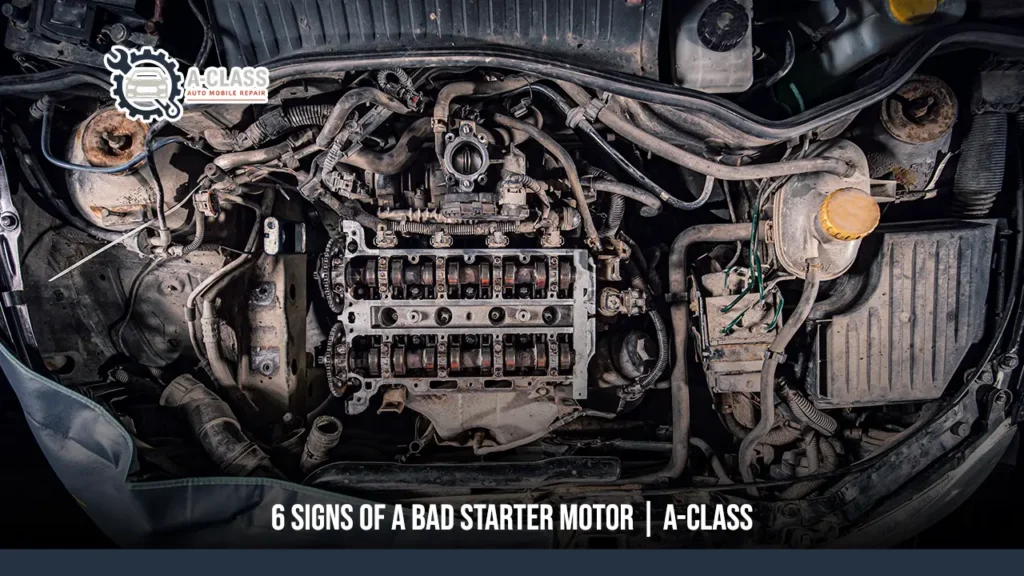
The definitive signs of a bad starter involve hearing a sharp single click or a harsh metallic grinding noise when you turn the ignition key, accompanied by a complete failure of the engine to crank. You may also notice a strong burning electrical smell coming from under the hood or experience intermittent starting issues despite having a fully charged battery. Recognizing these precise mechanical and electrical symptoms early allows you to schedule a professional replacement before the failing unit completely strands you on the road.
What Are the Signs of a Bad Starter? Complete Guide
The signs of a bad starter are a distinct set of mechanical and electrical symptoms that include hearing loud clicking noises, harsh grinding sounds, or experiencing a complete failure of the engine to turn over.
This specific set of warning indicators also features a burning electrical smell from the engine bay or the vehicle only starting intermittently despite having full electrical power.
Recognizing these precise signs immediately can prevent further engine damage and help you determine when it is time to call a mobile mechanic near me for professional assistance.
- Abnormal Noises: You will often hear a single loud click, rapid clicking, a grinding noise, or a high-pitched whirring sound upon trying to start the car.
- No Engine Crank: The engine completely fails to turn over despite the dashboard lights, headlights, and radio working perfectly.
- Visible Smoke and Odors: Smoke or a burning electrical smell emerges from the engine bay due to the starter motor overheating from excessive power draw.
- Intermittent Operation: The car only starts intermittently, working perfectly one day but refusing to crank the next as the internal components wear out.
Bad Starter Symptoms You Should Never Ignore
Ignoring a failing starter can leave you stranded in dangerous locations, making it crucial to pay immediate attention to warning symptoms like free-spinning noises or oil-soaked motor casings.
These specific signs indicate that the internal gears or electrical solenoids are actively breaking down and require immediate professional intervention before they destroy the engine’s flywheel.
Addressing these issues promptly at a reliable mechanic shop in Houston ensures your vehicle remains safe and dependable for your daily commute.
- Clicking or Buzzing Noises: A single, loud click or a rapid, continuous clicking sound when turning the key suggests the solenoid or starter motor is failing to engage.
- Grinding Noise: This harsh sound indicates that the starter gear is not properly engaging with the flywheel, or the teeth are severely worn down.
- Whirring or Free-Spinning: If you hear the starter spinning but the engine does not turn over, the starter gear is freely spinning without making a physical connection.
- Electrical Power but No Start: Dashboard lights, radio, and power accessories work perfectly, but the engine will not crank at all.
- Smoke or Burning Smell: Persistent attempts to start the car with a failing starter can lead to an electrical overload, causing smoke or a burning odor from under the hood.
- Oil-Soaked Unit: A visual inspection revealing the starter is soaked in oil, usually from a leaking valve cover, indicates an imminent short circuit and failure.
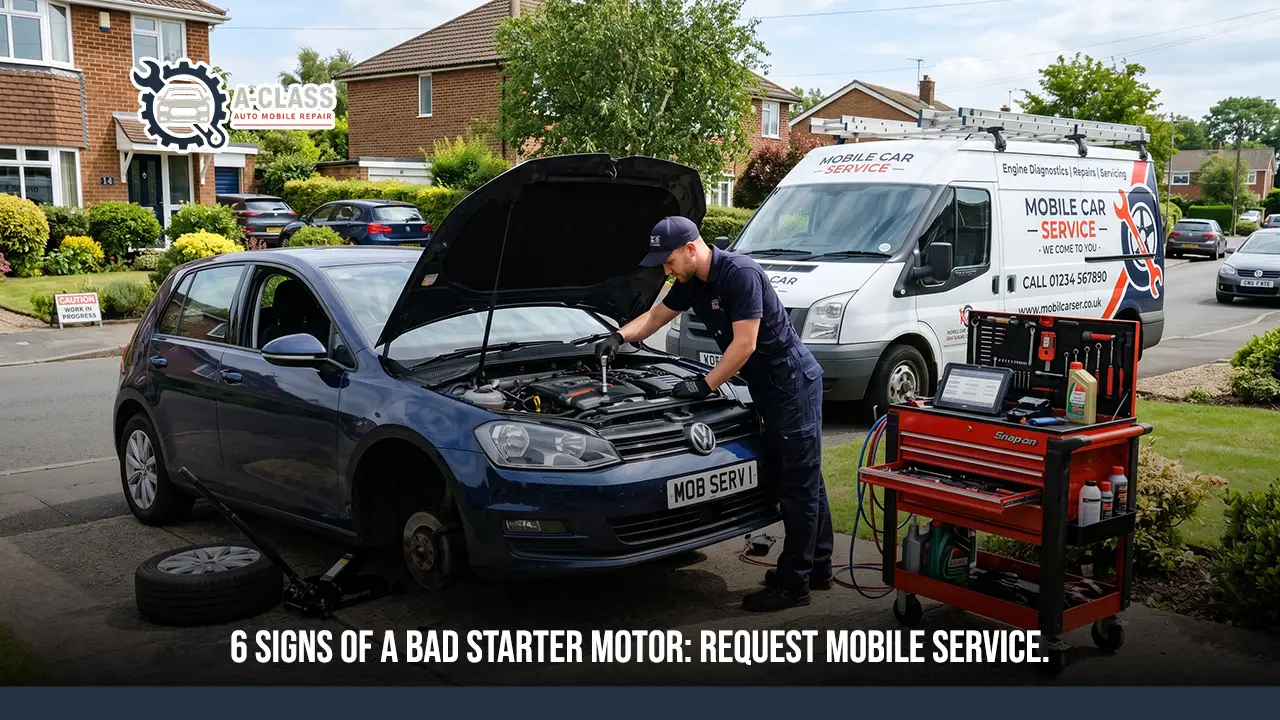
Car Won’t Start Clicking Noise: Is It the Starter or Battery?
Identifying the source of a clicking noise when your car refuses to start comes down to listening closely to whether the sound is rapid or a single, solid clunk.
While rapid clicking typically points to a drained battery lacking the amperage to spin the engine, a single loud click strongly suggests the starter solenoid has mechanically failed.
Performing a simple battery jump start is the easiest diagnostic test to figure out which component is actually preventing the vehicle from running.
- Rapid Clicking (Battery Issue): A weak battery, low charge, or poor connection prevents enough current from reaching the engine; if a jump-start works, the battery or alternator is the issue.
- Single Click (Starter Issue): A failing starter motor, solenoid, or relay will produce one loud click; if you jump-start the car and it still only makes a single click, the starter is the culprit.
- Dashboard Light Check: If the interior lights are bright and do not dim while you try to start the car, the battery is likely fine, pointing directly to a faulty starter.
- Summary of Causes: A weak battery is the most common cause of rapid clicking, whereas corroded cables prevent power delivery, and a faulty starter causes the single loud click.
Starter Motor Failure: Causes and Warning Signs
Starter motor failure occurs when the unit’s internal electrical components degrade due to natural age, intense engine heat, or corrosive fluid leaks compromising the metal housing.
The primary causes of this complete breakdown include worn-out carbon brushes, loose wiring connections, and oil dripping directly from leaky engine gaskets onto the starter.
Knowing these root causes can help a mobile mechanic in Houston properly diagnose the issue before performing a complete car parts replacement.
- Worn Out Brushes and Components: Normal wear and tear on internal parts over thousands of ignition cycles will eventually break the internal electrical circuits.
- Electrical Connection Issues: Corroded, loose, or physically damaged wiring connected directly to the battery or the ignition switch prevents power flow.
- Heat Damage: Proximity to the exhaust manifold or driving with missing heat shields can cause the unit to overheat and experience premature failure.
- Fluid Leaks and Contamination: Engine oil or coolant leaking directly onto the starter motor can ruin the sensitive electrical components and cause a fatal short circuit.
Starter vs Battery: How to Tell the Difference
Telling the difference between a failing starter and a dead battery relies entirely on observing how your vehicle’s electrical accessories behave when you turn the key.
A dead battery will completely kill the power to your dashboard and headlights, while a broken starter allows those electronics to remain bright and fully functional.
Performing a quick visual headlight test can help you decide immediately if you need a simple battery replacement or a completely new starter motor.
- Dead Battery Symptoms: Headlights are extremely dim or completely non-existent, dash lights fail to turn on, and you hear rapid clicking or complete silence.
- Bad Starter Symptoms: Your headlights remain bright and steady, the dashboard lights work perfectly, but you hear a single loud click or grinding noise.
- The Jump-Start Test: If the car successfully starts with jumper cables, the battery was dead; if it still refuses to crank, the starter is definitively at fault.
- Headlight Diagnostic Check: Turn on your headlights and attempt to crank the engine; if the lights instantly dim or shut off, it is a battery issue rather than a starter problem.
Why Your Car Won’t Start Even After a Jump Start
When you attach jumper cables and the engine still completely refuses to turn over, the mechanical problem lies far beyond a simple discharged battery.
This situation indicates that a critical component in the ignition circuit, such as the starter motor armature or the starter solenoid, has physically locked up or burned out.
If this happens while running errands around Cinco Ranch, you will likely need to contact a mechanic shop near me for an advanced electrical and mechanical diagnosis.
- Mechanical Starter Failure: The internal electrical brushes are completely worn down, or the starter motor armature has physically locked up, preventing any rotation regardless of power.
- Failed Starter Solenoid: The solenoid contacts are burned or fried, meaning the electrical circuit cannot physically close to push the pinion gear into the flywheel.
- Corroded Battery Terminals: Heavy oxidation or loose terminal clamps block the massive electrical current required by the starter, preventing power from reaching the engine.
- Bad Ground Wire: A broken or loose ground strap between the vehicle chassis and the engine block severs the electrical loop, disabling the starter motor completely.
- Seized Engine: In rare and severe mechanical failures, the engine itself is physically locked up, making it impossible for the starter to turn the flywheel.
Need a fast and reliable mobile mechanic in Houston Texas? A-Class Auto offers 24/7 mobile auto repair with 47+ expert mechanics & 8+ years of experience. Call now!
Call NowHow to Test a Car Starter at Home (Step-by-Step)
You can perform a reliable in-vehicle diagnostic test on your starting system using a standard digital multimeter set to DC voltage right in your driveway.
This step-by-step testing process helps pinpoint exactly where the electrical current is being lost between the battery, the ignition switch, and the starter solenoid.
If these steps reveal complex electrical faults, bringing your vehicle to an expert charging system repair shop is the safest way to professionally resolve the issue.
- Verify Battery Voltage: Set the multimeter to 20V DC and place the probes on the battery terminals; a healthy battery must read at least 12.6 volts before proceeding.
- Test Constant Power: Touch the red probe to the starter’s large main copper terminal and the black to an engine ground; it must show full battery voltage at all times.
- Test Ignition Signal: Move the red probe to the starter solenoid’s small trigger wire while an assistant turns the key; the meter should jump from 0 to 12 volts.
- Check for Voltage Drop: Keep the probes on the battery during a cranking attempt; if the voltage drops below 9.6 volts, the battery is failing the load test.
- Analyze the Results: If the starter receives 12 volts but does not spin, the unit is dead; if it reads 0 volts, the ignition signal is blocked by a bad relay or switch.
Common Causes of Starter Problems in Cars
Starter problems generally originate from extreme environmental wear, continuous electrical breakdowns, or severe physical stress on the internal mechanical components over the years. Over thousands of ignition cycles, the small internal parts like carbon brushes and copper contacts naturally burn away or become coated in corrosive grime.
Maintaining regular vehicle maintenance schedules is the most effective way to catch small oil leaks before they drip down and completely destroy the starter’s delicate wiring.
- Worn Solenoid Contacts: The starter solenoid acts as a high-current switch, and over thousands of starts, its internal copper contacts burn, pit, and fail to bridge power.
- Worn Carbon Brushes: Inside the motor, carbon brushes deliver electrical current to the spinning armature, but they eventually wear down to stubs and break the internal circuit.
- Oil and Fluid Leaks: Engine oil from leaky valve covers frequently drips directly onto the starter, gumming up internal brushes and causing a fatal electrical short circuit.
- Corroded Connections: Exposure to road salt, moisture, and intense heat corrodes the high-amperage terminals under the vehicle, creating massive electrical resistance.
- Damaged Pinion Gear: The small starter bendix gear can chip or physically wear down, preventing it from cleanly meshing with the engine flywheel and causing grinding noises.
Can a Bad Starter Drain Your Battery?
A severely damaged starter can indeed drain a perfectly healthy battery rapidly through aggressive internal short circuits or massive electrical overloads during cranking attempts.
When internal components fuse together, they create a continuous parasitic power draw that silently pulls electricity overnight until the battery is completely flat.
If you wake up to a dead vehicle, contacting a mobile mechanic near the Energy Corridor that does battery replacement can help verify if the starter is the actual cause of the drain.
- Internal Electrical Short: If internal insulation degrades or solenoid contacts melt together, it creates a direct short-circuit to ground, causing a parasitic drain that kills the battery overnight.
- Excessive Current Draw: A mechanically binding or seized starter requires massive energy to rotate, sometimes pulling over 300 amps instead of the normal 150 amps.
- Rapid Battery Flattening: This massive spike in electrical demand can completely drain or flatten a weaker battery in just a handful of unsuccessful cranking attempts.
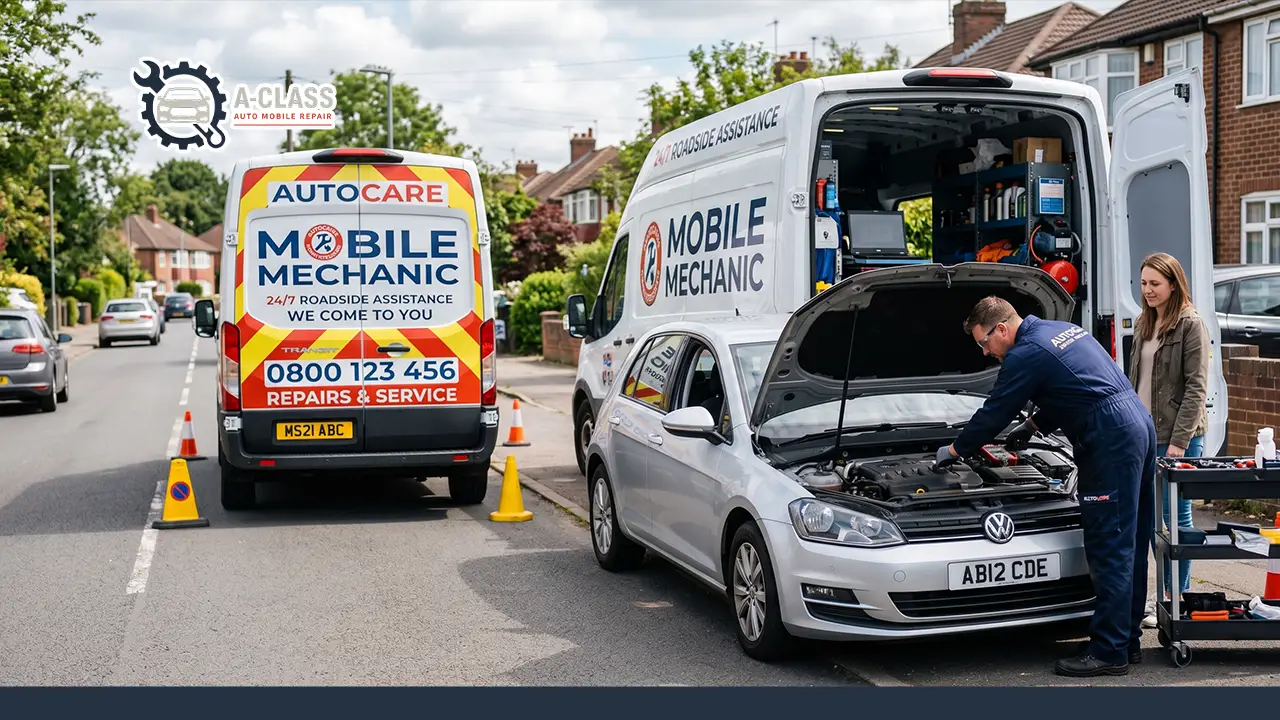
Temporary Fixes for a Bad Starter (Emergency Tips)
If you find yourself stranded in a busy area like Midtown Houston, these emergency bypassing techniques might help you force a failing starter to work one last time.
These are strictly temporary workarounds designed solely to get your vehicle to a repair facility, not permanent mechanical solutions. If these manual methods fail, you will need to rely on professional Roadside Assistance to tow your vehicle safely to a certified shop.
- The Tapping Method: Firmly tap the metal side casing of the starter body with a wrench to shake stuck carbon brushes back into contact with the internal armature.
- The Cycle Technique: Rapidly turn the ignition key from “Off” to “Start” 10 to 15 times to mechanically scrape away minor carbon buildup on worn solenoid contacts.
- Push Starting: For manual transmissions only, put the car in second gear, have helpers push the vehicle to 5 mph, and quickly release the clutch to mechanically turn the engine.
- Clean the Terminals: Disconnect the battery and scrape away blue or white acidic oxidation from the heavy power cables to reduce electrical resistance and restore power flow.
How Long Does a Starter Last and When to Replace It
A factory original starter is engineered to endure thousands of ignition cycles but is ultimately a wear-and-tear item that requires periodic replacement over the life of the car.
While most units survive up to a decade, neglecting engine oil leaks or ignoring prolonged cranking issues will severely cut that expected lifespan in half.
Scheduling a comprehensive 100,000 mile tune-up that includes checking for leaks requiring a Gasket Reseal will protect your starting system from premature failure.
- Average Lifespan: A high-quality OEM starter typically lasts between 100,000 and 150,000 miles, translating to roughly seven to ten years of normal driving conditions.
- Premature Failure Causes: Frequent short city trips, excessive cranking from a hard-starting engine, and dripping oil leaks will dramatically reduce the unit’s longevity.
- When to Replace Immediately: Swap the unit the moment you hear harsh grinding noises or experience intermittent starting failures to avoid catastrophic flywheel damage requiring major engine repair.
Signs Your Starter Is Failing vs Other Electrical Issues
Starting problems are frequently misdiagnosed because several different automotive electrical components share virtually identical failure symptoms when you turn the key.
Differentiating a broken starter from a failed alternator or a dead ignition switch requires observing exactly when the power cuts out and what specific noises occur.
- Failing Starter: Dashboard lights remain completely bright, but turning the key only produces a solid “clunk” without the engine spinning at all.
- Failing Alternator: The car starts normally but stalls shortly after driving, and dashboard lights slowly fade out as the battery completely drains on the road.
- Bad Ignition Switch: Turning the key results in absolute silence and a completely dead dashboard, as the broken switch cannot wake up the vehicle’s computers.
- Faulty Neutral Safety Switch: The starter refuses to crank while the transmission is in “Park” but instantly fires up if you shift the gear lever into “Neutral.”
Expert Starter Repair Services Right at Your Door
Do not let a failing ignition system leave you stranded; rely on our expert technicians for fast, professional diagnostics and reliable repair services delivered directly to your location. Whether you need an emergency starter replacement, a quick Oil change at home Humble TX, or to safely fix brakes while you are at work in Downtown Houston, we guarantee top-tier automotive service. Contact us today to book your appointment and get your vehicle back on the road safely.
Frequently Asked Questions About Signs of a Bad Starter
How can you tell if your starter is bad?
You can tell your starter is bad if turning the ignition key results in a single loud click or a harsh grinding noise without the engine actually turning over. Another clear indicator is if your vehicle’s headlights and dashboard radio turn on perfectly, but the engine remains completely silent and unresponsive to the key.
How do I know when my starter needs replacing?
You need to replace your starter immediately when it takes multiple attempts to start the vehicle, indicating that the internal carbon brushes are wearing out. You should also swap it out if a professional multimeter test shows it is drawing an excessive amount of electrical current, or if it begins to emit smoke during startup.
Is it my battery or starter?
The easiest way to check is by turning on your headlights while attempting to start the car to observe the electrical load. If the lights dim significantly or shut off entirely, your battery is dead; if the lights remain bright and steady but the engine will not crank, your starter is at fault.
Where can I find a mobile mechanic in Houston for starter repair?
If your starter fails unexpectedly, a certified mobile mechanic can come directly to your driveway to replace the unit on the spot. Whether you are stuck in Montrose, need Mobile radiator repair Houston, or require a sudden starter swap, mobile services save you the high cost and hassle of a tow truck.
How does Houston’s heat affect my car’s starter motor?
The intense summer heat in Houston increases the electrical resistance within the starter’s copper coils, making it much harder for the internal solenoid to engage. Combining this extreme ambient heat with the daily stress of stop-and-go traffic accelerates the wear on the starter’s internal components, leading to premature failure.