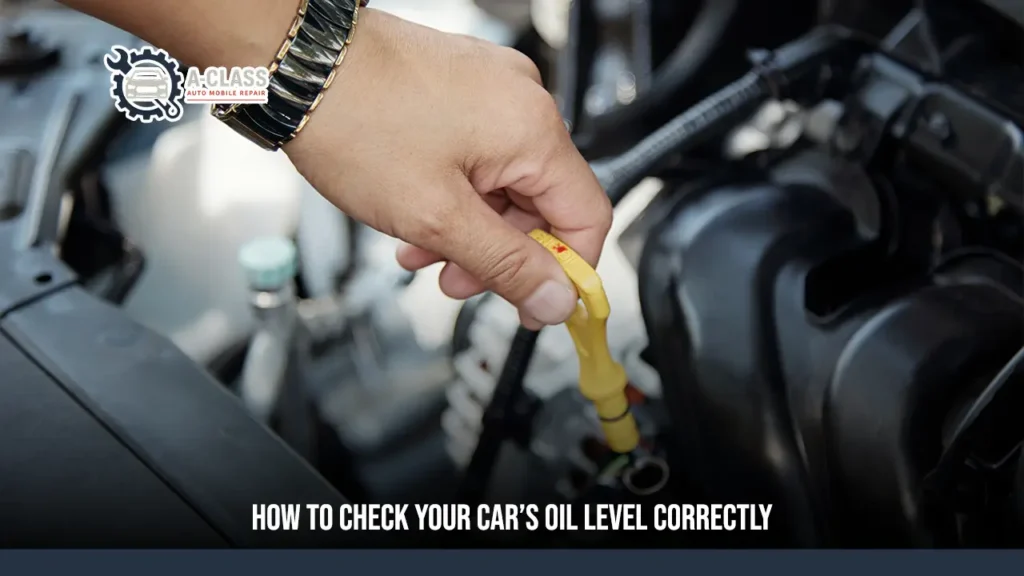
To properly check oil level in car, park the vehicle on level ground, turn off the engine, and wait 10–15 minutes for the oil to settle. Pull out the engine oil dipstick, wipe it clean, fully reinsert it, then remove it again to perform an accurate oil level check. The oil should sit between the minimum and maximum marks. While checking oil in car, inspect the oil color as well, since dark, milky, or gritty oil may indicate contamination or the need for an oil change.
Why Checking Oil Level in Car Is Important?
When Should You Check Oil Level in Your Car?
Timing plays a major role in getting an accurate engine oil reading. The best time to check oil level in car is when:
- The vehicle is parked on a flat surface
- The engine is turned off
- The oil has had enough time to settle into the oil pan
For most vehicles, waiting 10–15 minutes after shutting off the engine provides the most accurate oil measurement. Some manufacturers may recommend checking the oil with a slightly warm engine, so reviewing the owner’s manual is always recommended.
According to automotive maintenance guidance from the American Automobile Association (AAA), allowing the engine to rest on a level surface after shutdown is essential for achieving an accurate oil level reading and avoiding misleading results caused by oil movement inside the engine.
Checking your oil while your vehicle is parked on an incline will give you an inaccurate reading because the oil shifts to one side of the oil pan.
You should also avoid checking engine oil while running, since the lubricant is actively circulating throughout the engine and cannot provide a correct reading.
Tools Needed to Check Engine Oil Level
You only need a few basic items to perform a proper oil level correct:
- Clean Rag or Paper Towel: Used to wipe the dipstick clean before measuring
- Protective Gloves: Helps protect your hands from dirt, oil, and hot components
- Flashlight: Useful for locating the dipstick in dark engine bays
- Funnel (Optional): Helps prevent spills if additional oil needs to be added
How to Check Oil Level in Car?
Following the correct process is important for an accurate reading. Here is the correct way to check oil level in car step by step:
1. Park on Level Ground
Ensure the vehicle is completely level before checking oil in car. Sloped surfaces can produce incorrect readings.
2. Turn Off the Engine
Switch the engine off and allow it to cool for at least 10–15 minutes.
3. Locate the Dipstick
Open the hood and find the engine oil dipstick, typically identified by a yellow, orange, or red handle.
4. Remove and Clean the Dipstick
Pull the dipstick out completely and wipe away the residual oil using a clean cloth or paper towel.
5. Reinsert the Dipstick
Push the dipstick fully back into its tube until it is completely seated.
6. Remove It Again to Check the Reading
Pull the dipstick back out slowly and inspect the oil film near the tip.
7. Verify the Oil Level
The oil should sit between the “MIN” and “MAX” marks, crosshatched area, or “LOW” and “FULL” indicators. If the oil level is below the minimum mark, you should add oil gradually and recheck the level.
If you need help beyond how to check oil level in car, contact us today for expert support.
How to Read the Oil Dipstick Correctly?
After completing the oil level check, examine the oil film near the tip of the dipstick. Most engine oil dipsticks include MIN/MAX markings, LOW/FULL indicators, or a crosshatched safe zone. The correct oil level should always remain between the minimum and maximum marks.
- Oil Below MIN: The engine may be low on oil and require immediate topping off to maintain proper lubrication.
- Oil Above MAX: An overfilled engine can increase oil pressure, create foaming, and reduce lubrication efficiency.
- Amber or Light Brown Oil: Usually indicates healthy engine oil and normal lubrication.
- Dark Black Oil: Often means the oil is dirty or nearing the end of its service life.
- Milky Oil: May indicate coolant contamination inside the engine.
- Gritty or Dirty Oil: Can signal debris, sludge buildup, or internal engine wear.
For the most accurate engine oil reading, always wipe the dipstick clean before reinserting it and avoid checking oil while the engine is running.
What Different Oil Conditions Mean?
| Oil Appearance | Meaning |
|---|---|
| Amber or light brown | Normal and healthy |
| Dark black | Oil may need changing |
| Milky or creamy | Possible coolant contamination |
| Gritty texture | Dirt or metal contamination |
If the oil level is significantly below the lower mark, the engine may be nearly a quart low on oil and should be topped off immediately.
What Does Low or High Oil Level Mean?
Low Oil Level
A low oil level usually indicates:
- Oil leaks
- Burning oil internally
- Worn piston rings
- Damaged seals or gaskets
Driving with insufficient oil can increase friction, raise engine temperatures, and damage internal engine components.
High Oil Level
An oil level high reading is commonly caused by:
- Overfilling during an oil change
- Fuel dilution
- Coolant contamination
Too much oil can allow the crankshaft to whip the lubricant into foam, reducing lubrication efficiency and potentially damaging seals and bearings.
Maintaining the proper oil level is critical for long-term engine health.

Need a fast and reliable mobile mechanic in Houston Texas? A-Class Auto offers 24/7 mobile auto repair with 47+ expert mechanics & 8+ years of experience. Call now!
Call NowHow Often Should You Check Oil Level?
How often to check car oil depends on the vehicle’s age, mileage, and driving conditions.
Recommended Inspection Frequency
- Modern Vehicles: Once per month
- Older or High-Mileage Vehicles: Every two weeks
- Before Long Trips: Always check before extended driving
- Vehicles With Oil Consumption Issues: Check weekly
Checking engine oil level regularly helps identify problems before warning lights appear.
Common Mistakes When Checking Car Oil
Many drivers accidentally perform an incorrect oil level check like, One of the most common mistakes drivers make is checking engine oil on a hot or cold engine without following the manufacturer’s recommended procedure.. Common mistakes include:
Checking Oil While Engine Is Running
Checking oil with engine running is unsafe and produces inaccurate readings because the oil is circulating under pressure.
Parking on an Incline
Checking oil level on uneven ground can create false high or low readings.
Forgetting to Wipe the Dipstick
Residual oil from previous circulation can distort the reading.
Overfilling the Engine
Adding too much oil can damage seals and reduce lubrication performance.
Ignoring Oil Condition
Checking engine oil condition is just as important as checking the oil quantity.
How to Check Oil Level Without a Dipstick?
Some modern vehicles no longer use a traditional engine oil dipstick. Instead, they rely on an electronic oil level indicator integrated into the dashboard system.
To check oil level on dashboard systems:
- Park the vehicle on level ground
- Turn the engine off
- Open the vehicle information menu
- Navigate to the oil level indicator
- Wait for the electronic oil measurement to complete
Some vehicles require the engine to be warm before performing an electronic oil level check, so consult the owner’s manual for manufacturer-specific instructions.
When to Add Engine Oil?
You should add engine oil when:
- The oil level falls below the minimum mark
- The dashboard shows a low oil warning
- The engine begins making ticking or knocking sounds
- Oil pressure warnings appear
When adding oil:
- Use the manufacturer-recommended viscosity
- Add small amounts gradually
- Wait a few minutes before rechecking
- Avoid overfilling
The oil level does not need to be exactly at the maximum mark. It only needs to remain safely within the recommended range.
Difference Between Checking Oil in Old vs New Cars
Older Vehicles
Older vehicles typically rely on manual dipstick inspection and may require more frequent oil monitoring due to normal engine wear.
These vehicles often:
- Consume more oil
- Require manual inspections
- Lack advanced oil monitoring systems
Modern Vehicles
Modern vehicles may use:
- Electronic oil level indicators
- Dashboard oil monitoring systems
- Oil life monitoring sensors
Some newer models no longer include a physical dipstick at all.
Whether your vehicle uses a traditional dipstick or a digital oil level indicator car system, regular monitoring remains essential for protecting the engine. If you notice inconsistent oil readings, warning lights, or excessive oil consumption, a professional mobile mechanic Houston TX service can inspect the vehicle and diagnose potential engine issues before they become serious problems.

FAQs About How to Check Oil Level in Car
How do I check oil level in my car correctly?
Park the vehicle on level ground, turn off the engine, wait 10–15 minutes, remove the dipstick, wipe it clean, reinsert it fully, and remove it again to check the oil level between the minimum and maximum marks.
Can you check oil while the engine is running?
No. Checking engine oil while running is unsafe and produces inaccurate readings because the oil is actively circulating throughout the engine.
What should my oil level be at?
The oil should remain between the minimum and maximum markings on the dipstick or within the safe zone shown on the electronic oil level indicator.
How often should I check my car’s oil level?
Most vehicles should have their engine oil level checked at least once per month and before long trips.
What color should engine oil be?
Healthy engine oil is usually amber or light brown. Dark, milky, or gritty oil may indicate contamination or the need for an oil change.
What happens if the oil level is too high?
Overfilled oil can foam inside the engine, reduce lubrication efficiency, increase oil pressure, and potentially damage seals or engine components.