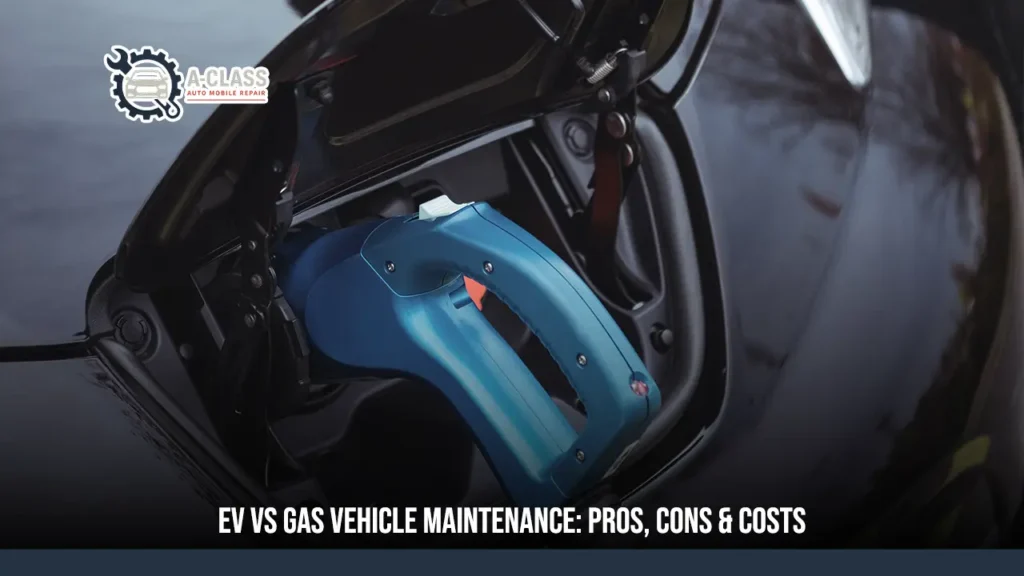
The comparison between electric car maintenance vs gas comes down to simplicity versus mechanical complexity, Electric cars need less maintenance because they have fewer moving parts and no oil changes, while gas cars require regular engine and fluid servicing.
Over time, EVs are usually cheaper to maintain and need fewer service visits, with reliable support available from providers like A-Class Auto offering on-site auto repair service.
Electric Car Maintenance vs Gas: Key Differences
Electric vehicles (EVs) require different maintenance compared to traditional gas-powered vehicles.
While both types need regular upkeep, the design and technology differences between them lead to distinct maintenance needs.
Below are the key differences that make electric car maintenance simpler and more cost-effective:
No Need for Oil Changes
Electric cars do not have an internal combustion engine, so they don’t require oil changes, This can save owners hundreds of dollars annually that would otherwise be spent on oil changes for gas cars.
Simplified Transmission
Most electric cars use a single-speed transmission that doesn’t need regular fluid changes or maintenance, In contrast, gas-powered cars often require transmission fluid changes and more frequent servicing.
No Spark Plugs or Timing Belts
Electric vehicles don’t use spark plugs or timing belts because there’s no combustion engine, This means you won’t have to worry about replacing these parts, unlike in gas-powered vehicles.
No Air Intake Filters
Electric cars don’t need engine air filters, which are typically required in gas-powered vehicles, While EVs do have cabin air filters, the absence of engine air filters reduces maintenance.
Regenerative Braking System
Electric cars use regenerative braking, which helps slow the car down while recharging the battery, This reduces the need for frequent brake pad replacements compared to gas cars, which rely on friction brakes and require more frequent maintenance.
Tire Maintenance Requires More Attention
Due to the heavier weight of electric vehicles (from large battery packs), and the instant torque provided by electric motors, EVs can cause more tire wear, This means regular tire rotations and choosing specialized tires for EVs is essential.
Battery Care and Thermal Management
Electric cars have a battery management system (BMS) that requires periodic checks, While gas cars require cooling systems for their engines, EVs focus on cooling their batteries, which typically requires less frequent maintenance.
Why Electric Car Maintenance Is Different From Gas Cars
Electric car maintenance is different from gas cars because of how each vehicle is built. Gas-powered cars rely on engines and many mechanical parts that need regular servicing, while electric cars use simpler systems and modern technology. For this reason, electric car maintenance focuses on the following areas:
Automatic software updates
Many improvements or minor issues can be fixed through online software updates, without the need to visit a service center.
Battery care instead of engine servicing
There is no engine oil or complex engine maintenance. Instead, attention is given to keeping the battery operating within safe temperatures for consistent performance.
Fewer parts that wear out
Electric cars have fewer moving parts, which reduces friction, wear, and long-term mechanical problems compared to gas cars.
Fewer service center visits
With fewer components that can fail, electric car owners usually need fewer maintenance visits than gas car owners.
Routine Maintenance for Electric Cars
Routine electric car maintenance usually includes the following:
- Tire rotation
Electric cars are heavier because of the battery and deliver instant power, which can cause uneven tire wear, Rotating the tires regularly helps extend tire life and improves driving comfort.
- Cabin air filter replacement
Just like gas cars, electric vehicles need a clean cabin air filter to keep the air inside fresh and protect the air conditioning system.
- Brake fluid checks
Even though regenerative braking reduces brake wear, the brake fluid still needs periodic inspection to ensure safe braking performance.
- Battery health inspections
Service centers check battery performance to make sure all cells are balanced and operating within safe limits, helping extend battery life.
- Cooling system inspection
Electric cars use special coolant to manage battery temperature. Checking coolant levels helps prevent overheating and long-term battery damage.
For drivers who want professional and reliable Routine car maintenance Houston, trusted service centers like A-Class Auto can handle electric vehicle maintenance with the right tools and experience.
Routine Maintenance for Gas Cars
Routine gas car maintenance usually includes the following:
- Engine oil and filter changes: Gas cars need frequent oil changes to keep the engine lubricated and prevent overheating or internal damage.
- Air filter replacement: The engine air filter must be replaced regularly, especially in dusty environments, to maintain proper airflow and fuel efficiency.
- Spark plugs and ignition components: These parts wear out over time and need replacement to keep the engine running smoothly and avoid misfires.
- Cooling system service: Gas engines generate a lot of heat, so coolant levels and condition must be checked to prevent overheating and engine damage.
- Transmission fluid service: Automatic transmissions depend on clean fluid for smooth gear changes, making regular inspections and fluid changes essential.
Because of these ongoing services, gas car owners often face a higher average car maintenance cost over time compared to electric vehicle owners.
Cost Comparison: Electric vs Gas Car Maintenance
When comparing electric and gas-powered cars, the real difference appears over time rather than at purchase.
Maintenance costs play a major role in long-term ownership, This difference becomes clear in the following areas:
- Electric cars do not require oil changes, exhaust repairs, or complex engine servicing, which helps keep regular maintenance expenses low.
- Gas cars are more likely to suffer from engine, transmission, and exhaust-related issues, while electric cars avoid many of these common problems.
- Gas-powered vehicles often need several maintenance visits each year, whereas electric cars usually require only basic inspections.
- Over several years, these reduced maintenance needs add up, making electric vehicles more affordable to own and maintain.
Because of these advantages, electric vehicles are often considered cars with low maintenance, especially for drivers who want to reduce long-term ownership costs.
Battery Maintenance vs Engine Maintenance
As vehicles evolve, maintenance priorities have changed. Gas-powered cars focus on engine care, while electric vehicles focus on battery health, Each system has its own maintenance needs:
Engine Maintenance in Gas Cars
Gas engines require regular hands-on maintenance to keep running properly. This usually includes:
- Oil changes to lubricate engine parts and prevent overheating
- Cooling system checks to manage engine heat
- Spark plugs and ignition components to ensure smooth engine performance
- Emission system maintenance to control exhaust gases
- Frequent inspections to avoid sudden engine failure
Battery Maintenance in Electric Cars
Electric vehicles do not rely on engines, so maintenance is simpler and more system-focused, This usually includes:
- Battery health monitoring to track performance over time
- Temperature management to protect the battery from heat damage
- Software updates to improve efficiency and battery behavior
- Periodic system diagnostics to detect issues early
- Long-term performance checks instead of frequent mechanical repairs
For many drivers, this shift toward Battery maintenance vs engine maintenance makes electric vehicles easier and less stressful to maintain over the long term.
Brake and Tire Maintenance Differences
While both electric and gas-powered cars use brakes and tires, the way these parts wear and are maintained is very different, These differences can be seen in the following areas:
Brake Maintenance
- Gas cars: Gas-powered vehicles rely completely on friction brakin, This causes brake pads and rotors to wear out faster and require more frequent replacement.
- Electric cars: Electric vehicles use regenerative braking, which slows the car using the electric motor, This reduces brake pad usage and helps extend brake life.
Tire Maintenance
- Gas cars: Tire wear is usually more balanced and predictable, depending mostly on driving habits and road conditions.
- Electric cars: EVs are heavier due to the battery and deliver instant torque, which puts more stress on tires and can lead to faster wear if tires are not rotated regularly.
For many drivers, understanding these Brake and tire maintenance differences helps plan maintenance better and avoid unexpected costs.
Cooling System and Fluid Maintenance: EV vs Gas
Both electric and gas-powered vehicles rely on cooling systems, but how these systems work and how often they need service is very different.
The type of powertrain determines the fluids used and the level of maintenance required, These differences include:
Cooling and Fluids in Gas Cars
Gas engines generate high levels of heat and depend on several fluids to operate safely, Maintenance usually includes:
- Engine coolant flushes to prevent overheating and corrosion.
- Radiator and hose inspections to avoid leaks and engine damage.
- Multiple fluids such as engine oil, transmission fluid, and differential fluid.
- More frequent servicing due to heat, pressure, and mechanical wear.
Cooling and Fluids in Electric Cars
Electric vehicles do not deal with combustion heat, which makes cooling simpler and less frequent. Maintenance usually includes:
- Battery cooling system checks to keep battery temperatures stable.
- Specialized coolant designed to protect electrical components.
- Fewer fluids overall, mainly coolant and windshield washer fluid.
- Longer service intervals compared to gas vehicles.
Understanding these differences helps drivers clearly see what maintenance does an electric car need, especially when compared to the fluid-heavy maintenance of gas-powered cars.
Software Updates and Diagnostics: EV vs Gas
Modern vehicles rely on software more than ever, but electric cars and gas cars handle updates and diagnostics very differently.
The way problems are detected and fixed plays a big role in maintenance convenience, These differences include:
Software and Diagnostics in Gas Cars
- Manual diagnostic: When a warning light appears, the car must be taken to a service center where a technician scans the system to find the issue.
- Limited software updates: Software updates are rare and usually require a physical visit to the dealership.
- Reactive maintenance: Problems are often addressed only after a fault occurs, which can lead to higher repair costs.
Software and Diagnostics in Electric Cars
- Over-the-air (OTA) updates: Many improvements and fixes are delivered remotely through software updates while the car is parked.
- Continuous system monitoring: EVs constantly monitor battery health and system performance, helping detect issues early.
- Preventive maintenance: Small issues can be corrected before they turn into major problems, reducing unexpected repairs.
Because of these advantages, electric vehicles are often seen as part of the best fuel-efficient cars with low maintenance, especially for drivers who value convenience and long-term savings.
Common Mistakes With Electric and Gas Car Maintenance
Many maintenance problems happen not because cars are unreliable, but because of common owner mistakes. Electric and gas cars each have their own risks if routine care is ignored, The most common mistakes include:
Mistakes With Gas Cars
- Skipping oil changes: Delaying oil changes is one of the main causes of engine damage and failure.
- Ignoring transmission fluid: Many drivers assume transmission fluid lasts forever, which can lead to costly transmission repairs.
- Overlooking cooling system issues: Low or dirty coolant can cause overheating and serious engine damage.
Mistakes With Electric Cars
- Charging to 100% every day: Constant full charging can reduce battery lifespan over time. Daily charging limits are usually healthier for the battery.
- Neglecting tire rotation: EV weight and instant torque cause uneven tire wear if rotations are skipped.
- Using high-pressure water in the engine bay: This can damage electrical components and high-voltage connections.
Tips to Reduce Maintenance Costs for Both EVs and Gas Cars
No matter what type of car you drive or which mechanic shop near me you choose, , good habits can significantly lower maintenance costs over time. Simple actions can make a big difference:
- Drive smoothly: Gentle acceleration and braking reduce wear on tires, brakes, and suspension.
- Check tire pressure regularly: Proper tire pressure improves fuel efficiency, driving range, and tire lifespan.
- Replace cabin air filters on time: A clean filter helps the air conditioning system work efficiently and prevents costly HVAC issues.
- Address small issues early: Fixing minor problems early is always cheaper than waiting for major failures.
- Follow the manufacturer’s service schedule: Staying on schedule helps avoid unexpected repairs and keeps the car running reliably.
Frequently Asked Questions
Are Electric Cars Cheaper to Maintain Than Gas Cars?
Yes, electric cars are generally cheaper to maintain because they don’t need oil changes and have fewer moving parts that can wear out over time.
How Often Do Electric Cars Need Maintenance Compared to Gas Cars?
Electric cars usually need fewer service visits. Most maintenance focuses on inspections, tires, and software, while gas cars require frequent oil and engine-related services.
Can I Take an Electric Car to a Regular Mechanic?
Not all regular mechanics are equipped to work on electric cars. It’s best to choose a service center with experience and proper tools for EV maintenance.
Which Costs More in the Long Run: EV or Gas Maintenance?
Gas cars typically cost more to maintain over the long run due to engine repairs, fluids, and frequent servicing. Electric vehicles usually have lower lifetime maintenance costs.