
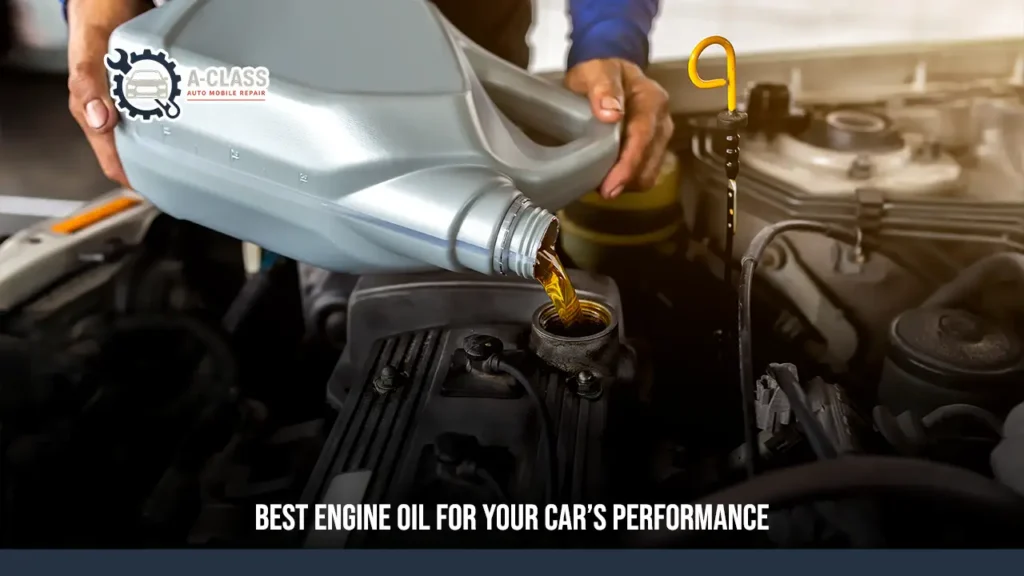
Choosing the best oil for cars primarily depends on the specific recommendations found in your vehicle’s owner’s manual to guarantee the correct viscosity for your motor.
For modern vehicles, full synthetic oil is the top choice thanks to its superior ability to withstand extreme heat and provide maximum protection for internal parts.
On the other hand, for older vehicles with high mileage, high-mileage formulated oils are the perfect option to seal internal gaps, rejuvenate worn engine gaskets, and prevent annoying leaks.
Types of car engine oils explained
Walking down the auto parts aisle reveals four main car oil types designed to fit different engine ages and driving habits:
- Conventional oil: This traditional option comes directly from refined crude oil and works perfectly well for older engines with simple mechanical designs.
- Full synthetic oil: Scientists engineer this incredibly pure fluid in a lab to provide maximum heat resistance and the highest level of daily wear protection.
- Synthetic blend: This smart middle ground mixes standard and synthetic liquids together to give you improved performance at a very budget-friendly price point.
- High-mileage oil: Companies pack this specific formula with extra seal conditioners to help older vehicles stop annoying leaks and reduce internal burning.
Synthetic vs conventional oil
Choosing between these popular options really comes down to your budget and how long you plan to keep your vehicle on the road, including these key differences:
What conventional oil offers
Conventional oil is often chosen for its simple approach and lower price during routine maintenance:
- Basic affordability: You pay significantly less money upfront at the repair shop during your routine oil change visits.
- Standard protection: It provides adequate safety for relaxed, everyday city driving without putting heavy stress on the motor.
Why synthetic oil wins
On the other hand, synthetic oil cars benefit from laboratory-grade engineering that offers several advantages for engine lubrication:
- Superior flow: The pure chemical structure flows instantly on freezing mornings to protect metal parts before they even get a chance to rub together.
- Longer lifespan: You can safely skip the old 3,000-mile rule and drive up to 10,000 miles between changes without losing any cleaning power.
How viscosity affects engine performance
Finding the best oil for cars requires understanding viscosity, which simply measures how thick the fluid is and how easily it moves through the engine, meaning that:
- Thin oil (Low viscosity): Flows quickly like water on freezing mornings to instantly protect dry metal parts from scraping together when you turn the key.
- Thick oil (High viscosity): Acts more like warm syrup to maintain a tough, protective cushion between moving engine parts during scorching summer driving.
- Multi-grade oil (like 5W-30): Adapts cleverly to temperature changes, flowing smoothly when cold and staying thick enough when the engine gets extremely hot.
Best oil for new vs old cars
Choosing the best engine oil changes significantly as your vehicle ages and its internal metal parts naturally wear down, making it crucial to understand the difference through the following comparison:
Best oil for new cars
Modern engines are built with complex parts and extremely tight spaces, requiring you to strictly use the recommended motor oil (like a full synthetic 0W-20 or 5W-30) because it provides these essential benefits:
- Fast flow for tight spaces: Uses a thinner viscosity to quickly reach narrow passages and lubricate modern turbochargers instantly upon startup.
- Maximum daily performance: Delivers superior heat stability, better cold-start protection, and excellent fuel efficiency for daily driving.
- Longer service intervals: Allows you to drive much further between routine oil changes without sacrificing high-level engine protection.
Best oil for old cars
Once your car passes the 100,000 km mark, the internal parts naturally wear down and create larger clearances, making thicker high-mileage or mineral oils (like 10W-40 or 20W-50) the perfect choice for these reasons:
- Sealing worn gaps: Uses a thicker formula to fill the wider spaces between aging parts, which helps maintain proper oil pressure and reduces oil consumption.
- Rejuvenating old seals: Contains special seal conditioners that soften brittle, aged gaskets to actively stop annoying oil leaks from escaping the engine.
- Cleaning out engine sludge: Includes extra heavy-duty detergents designed specifically to clean out years of built-up dirt and keep the aging motor running smoothly.
Mistakes to avoid when choosing car oil
Searching for the best oil for cars can easily lead to costly engine damage if you ignore the basic rules of maintenance, so make sure to avoid these common pitfalls:
- Ignoring the owner’s manual: Pouring in a random, thick oil instead of the specific formula recommended by the factory can starve a modern engine of lubrication and trigger warning lights.
- Mixing different viscosity grades: Blending a thick summer oil with a thin winter oil creates an unpredictable, unbalanced mixture that fails to protect your motor properly in extreme temperatures.
- Buying based only on the cheapest price: Grabbing the lowest-priced bottle on the shelf usually means you are sacrificing critical cleaning detergents and anti-wear additives that keep the engine alive.
- Forgetting to replace the oil filter: Putting fresh, clean liquid into your car but leaving the old, clogged filter attached simply forces the new oil to mix with old dirt and metal shavings.
Choosing the best oil for cars is essential to protect your engine and extend its lifespan.
The right oil improves performance, prevents wear, and keeps your vehicle running smoothly.
At A-Class Auto, our experts help you select the correct oil based on your car’s specifications and mileage.
Book your service today at A-Class Auto and keep your engine performing at its best.
Frequently Asked Questions
What is the best oil for daily driving?
For everyday stop-and-go city traffic, the best oil for cars is typically a full synthetic or a high-quality synthetic blend.
These oils handle the constant heating and cooling cycles of daily commutes much better than conventional oil, preventing harmful sludge buildup.
Is synthetic oil better for all cars?
While it is widely considered the best engine oil for modern and high-performance vehicles, it is not always perfect for every situation.
Pouring a very thin, modern synthetic oil into a classic car or a heavily worn engine from the 1990s might actually cause it to leak or burn faster through the aged seals.
What oil lasts the longest?
Full synthetic formulas are definitely the best oil for cars when it comes to long-lasting endurance.
Because they are engineered in a lab to resist breaking down under extreme heat, they can safely protect your engine for 7,500 to 10,000 miles, saving you multiple trips to the mechanic.