
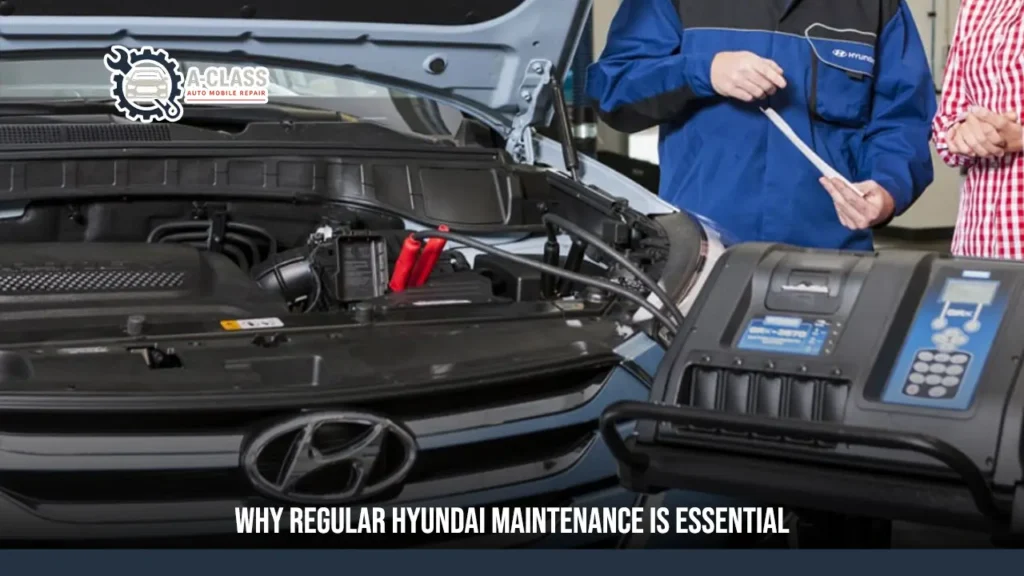
Regular Hyundai maintenance helps keep your vehicle safe, reliable, and running efficiently over time. With modern Hyundai models relying on advanced systems, consistent care is essential to avoid unexpected problems. Many drivers choose flexible options like a trusted mobile mechanic service from A-Class Auto to save time and reduce hassle.
Staying consistent with Routine car maintenance Houston services is the key to long-term reliability and lower repair costs.
Why Regular Hyundai Maintenance Is Important
Regular Hyundai maintenance is important because it helps:
- Protect the engine and transmission from premature wear
Timely oil changes and inspections reduce internal friction and heat, helping critical components last longer without expensive repairs.
- Keep safety systems and sensors working correctly
Modern Hyundai vehicles rely on cameras, sensors, and driver-assist features that require clean components and proper calibration.
- Maintain fuel efficiency and smooth performance
A well-maintained engine burns fuel more efficiently, delivering better mileage and a smoother driving experience.
- Preserve warranty coverage
Hyundai warranties require documented maintenance records. Skipping routine service can result in denied warranty claims.
- Increase resale value
A complete service history reassures buyers that the vehicle was properly cared for and reduces concerns about hidden problems.
- Reduce the risk of unexpected breakdowns
Routine inspections catch early warning signs before they turn into roadside emergencies.
All of these points clearly explain what regular maintenance does a car need.
What Regular Hyundai Maintenance Includes
Regular Hyundai maintenance typically includes:
- Engine oil and filter changes
Clean oil keeps engine parts lubricated, prevents sludge buildup, and helps control operating temperatures.
- Tire rotation and balance checks
Rotating tires ensures even wear, improves handling, and extends tire life, especially during daily driving.
- Brake system inspection
Pads, rotors, and brake fluid are checked to ensure safe stopping performance and avoid damage to braking components.
- Fluid checks and replenishment
Coolant, transmission fluid, and washer fluid are inspected to protect critical systems from overheating or wear.
- Air filter replacement
Clean engine and cabin air filters improve engine efficiency and maintain clean air inside the vehicle.
- Battery and electrical diagnostics
Testing the battery and scanning electronic systems helps detect hidden issues before they cause starting or performance problems.
These services are organized within a structured Car maintenance schedule.
Scheduled Hyundai Maintenance by Mileage

Hyundai follows a mileage-based service approach to ensure maintenance is performed at the right time throughout the vehicle’s life.
Key maintenance milestones include:
- 7,500 miles: Oil change, tire rotation, and a basic multi-point inspection to establish a healthy maintenance baseline.
- 15,000 miles: Includes earlier services plus cabin air filter replacement and additional system checks.
- 30,000 miles: A major service point that often includes brake fluid replacement and more detailed inspections.
- 60,000 miles: Spark plug replacement, battery testing, and inspection of belts and hoses.
- 95,000 miles and beyond: Replacement of long-term wear items, depending on the model and engine type.
This structured approach follows standard car maintenance by mileage practices.
How Regular Hyundai Maintenance Reduces Repair Costs
Routine maintenance is one of the most effective ways to control long-term ownership expenses. Spending a little on regular service helps avoid major repair bills later, Regular Hyundai maintenance reduces costs by:
- Catching small problems early: Minor leaks or worn components are easier and cheaper to fix when found early.
- Preventing engine damage: Timely oil changes prevent sludge buildup, which is a leading cause of engine failure.
- Extending component lifespan: Proper care allows engines and transmissions to reach higher mileage with fewer repairs.
- Improving fuel efficiency: Clean filters and fresh fluids help the engine run efficiently, reducing fuel consumption.
- Reducing emergency repair visits: Planned maintenance is far less expensive than unexpected roadside or breakdown repairs.
These benefits help lower the average car maintenance cost over time.

Need a fast and reliable mobile mechanic in Houston Texas? A-Class Auto offers 24/7 mobile auto repair with 47+ expert mechanics & 8+ years of experience. Call now!
Call NowCommon Mistakes When Skipping Hyundai Maintenance
Skipping routine maintenance often creates problems that could have been avoided, Common mistakes include:
- Delaying oil changes and routine inspections
- Waiting for warning lights instead of maintaining proactively
- Ignoring software updates that affect safety and performance
- Leaving gaps in service records that reduce resale value
- Assuming the vehicle is fine because it still drives normally
Signs Your Hyundai Needs Immediate Maintenance

Some warning signs require immediate attention and should never be ignored, These include:
- A flashing check engine light
- Red warning lights on the dashboard
- Knocking, grinding, or squealing noises
- Sudden loss of fuel efficiency or braking performance
- Visible fluid leaks under the vehicle
Addressing these signs early prevents serious damage and keeps your Hyundai safe to drive.
Regular Hyundai maintenance is the key to keeping your vehicle safe, reliable, and cost-effective over time. Staying on schedule helps prevent unexpected breakdowns, protects your warranty, and reduces long-term repair expenses.
If you’re looking for professional, hassle-free Hyundai maintenance, A-Class Auto is here to help. Our experienced team offers convenient mobile and on-site service designed to fit your schedule and keep your Hyundai running at its best.
Book your Hyundai maintenance with A-Class Auto today and drive with confidence.
Frequently Asked Questions About Hyundai Maintenance
How Often Should I Service My Hyundai?
Most Hyundai models in 2026 need service every 7,500 miles or 12 months.
This usually includes oil and filter changes, tire rotation, and basic safety inspections. Major services happen at higher mileage points, such as brake fluid replacement around 30,000 miles and spark plug replacement near 60,000 miles.
Does Regular Hyundai Maintenance Extend Vehicle Lifespan?
Yes. Regular maintenance is one of the main reasons Hyundai vehicles reach high mileage.
Consistent oil changes protect the engine, clean filters improve fuel efficiency, and routine checks catch small issues before they turn into major and expensive repairs.
What Happens If I Skip Hyundai Maintenance?
Skipping maintenance can lead to serious problems. It may void your warranty, increase safety risks, and reduce your car’s resale value.
Small delays often turn into costly repairs that could have been avoided with regular service.