
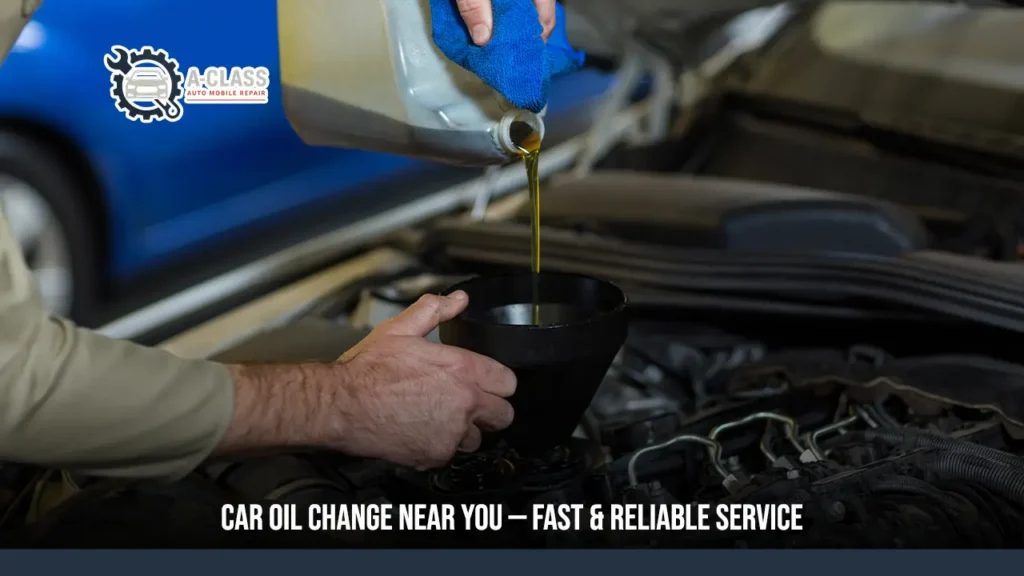
Maintaining peak engine performance starts with high-quality lubrication that protects vital internal components from wear. At a-classauto we provide the specialized technical care required for a professional car oil change near me.
Our process eliminates harmful sludge and reduces friction to extend the life of your vehicle significantly. We go beyond simple fluid replacement by including meticulous filter checks and comprehensive system inspections. Trusting our experts ensures your car remains reliable and efficient on the road for many miles ahead.
What Is a Car Oil Change and Why It Matters: Car Oil Change Near Me
A car oil change is the routine removal of old, dirty oil from your engine and replacing it with fresh lubricant. This service is essential for maintaining the health and performance of your vehicle over time, where it works to:
- Reduce Friction: It coats moving parts to prevent metal-on-metal contact and premature wear.
- Support Cooling: It transfers heat away from the hottest parts of the engine to prevent overheating.
- Clean the System: It flushes out dirt, dust, and carbon deposits that naturally build up during driving.
- Increase Efficiency: A well-lubricated engine operates with less resistance and lasts much longer.
Contact Us Today for Expert Car Care
How Engine Oil Works Inside Your Car
Engine oil acts as the primary life-support system for your vehicle, functioning as a high-performance hydraulic fluid designed to withstand extreme pressure. To ensure peak performance, the oil executes several complex mechanical processes in a continuous cycle:
Pressure Distribution
The oil pump forces the fluid through the filtration system to capture microscopic metal shavings before distributing it through the engine block.
Hydrodynamic Shielding
It creates a thin, pressurized film between high-speed components like the crankshaft and bearings, preventing destructive metal-on-metal contact.
Thermal Management
As the fluid circulates around the combustion chamber, it absorbs intense thermal energy and carries it back to the oil pan for cooling.
Contaminant Suspension
Specialized additives keep carbon soot and debris floating in the oil rather than settling as harmful sludge on engine surfaces.
Beyond basic lubrication, the fluid is responsible for these critical engineering tasks:
- Piston Compression: It seals the minute gaps between piston rings and cylinder walls to prevent loss of power.
- Corrosive Protection: Chemical detergents neutralize the acidic byproducts created during every fuel explosion.
- Variable Timing: In modern vehicles, oil pressure acts as a hydraulic signal to adjust valve timing and improve fuel economy.
Why Regular Oil Change Is Essential for Engine Health
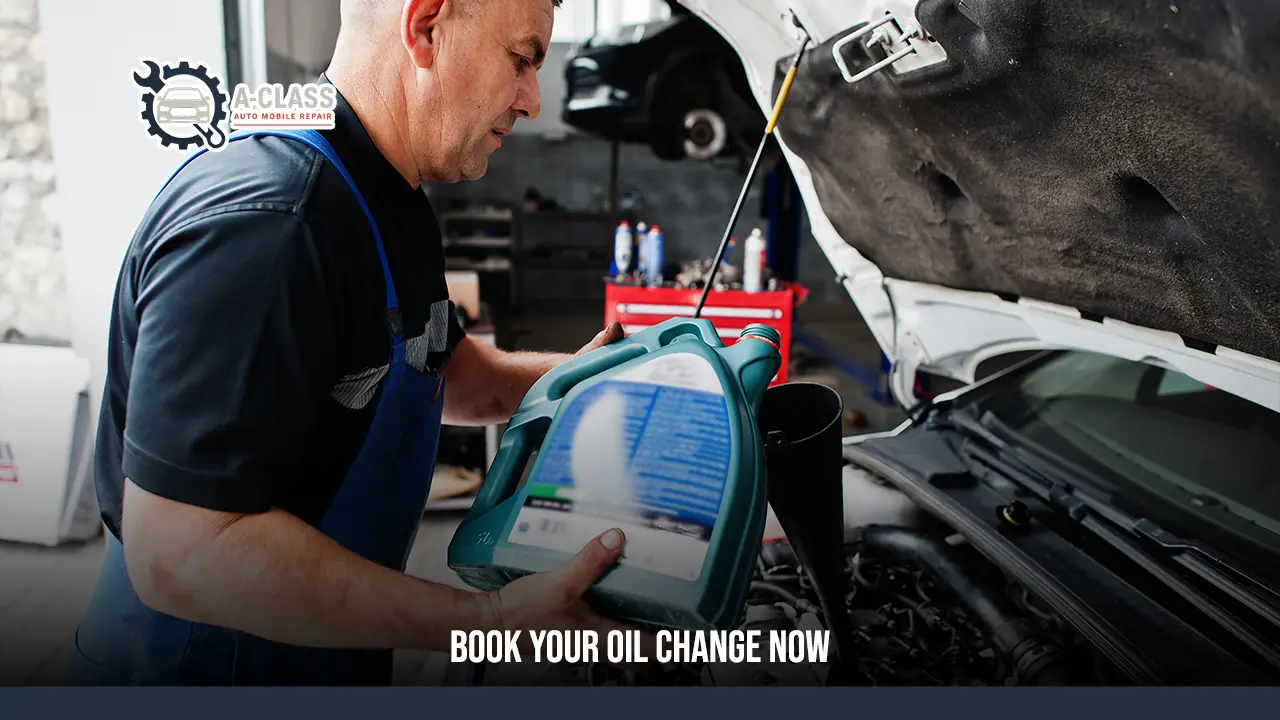
Engine oil faces constant degradation from extreme combustion temperatures and chemical reactions. Maintaining a regular schedule is critical to preventing several mechanical issues that can compromise your vehicle:
- Molecular Stability: Repeated heat cycles eventually destroy the oil’s ability to maintain a protective film, leading to direct metal-on-metal friction.
- Deposit Management: Fresh oil contains active detergents that scrub the engine’s interior, preventing carbon soot from settling and forming restrictive sludge.
- Sealing Integrity: High-quality oil helps maintain the pressure seal between piston rings and cylinder walls, which prevents power loss and excessive oil consumption.
- Corrosion Inhibition: New fluid provides a fresh dose of chemical additives that neutralize acidic byproducts created during the fuel burning process.
Utilizing a high-quality engine oil change service is the only way to guarantee these protective layers remain active. This ensures your vehicle’s longevity and performance, which is exactly what we provide at a-classauto when you visit for a car oil change near me.
Car Oil Change Near Me: How to Find the Best Service
Finding a shop you can trust involves more than just looking for the lowest price. A high-quality maintenance provider should demonstrate technical proficiency and honesty through several key indicators:
- Technical Expertise: The staff must be intimately familiar with your vehicle’s specific oil viscosity requirements and manufacturer filter specifications.
- Advanced Tooling: Professional shops use precise torque tools to ensure the drain plug and oil filter housing are secured without causing damage.
- Fluid Options: A top-tier provider offers a range of lubricants, from high-mileage blends to high-performance synthetics, tailored to your driving habits.
- Comprehensive Inspection: The service should include a visual health check of other vital components such as belts, hoses, and secondary fluid levels.
Choosing a-classauto guarantees that your vehicle receives meticulous attention and industry-leading standards whenever you search for a car oil change near me.
Types of Engine Oil Used in Car Oil Changes
Full Synthetic Oil
- This is engineered at a molecular level to provide maximum thermal stability.
- It flows better in cold temperatures and resists thinning out in extreme heat, making it the gold standard for high-performance vehicles.
Synthetic Blends
- A strategic mixture of synthetic and conventional oils.
- It offers a significant upgrade in protection over mineral oil while remaining a cost-effective middle ground for trucks and SUVs.
Conventional Mineral Oil
- Derived directly from refined crude oil, this is typically used for older engine designs or during the break-in period of certain new engines.
High-Mileage Formulas
- Specifically designed for vehicles with over 75,000 miles, these oils contain unique seal conditioners that help restore internal gaskets and prevent minor leaks.
At a-classauto, our experts evaluate your driving environment and engine age to determine if your vehicle requires a premium synthetic oil change, ensuring total protection every time you come in for a car oil change near me.
Explore Our Professional Auto Services
How Often Should You Change Your Car Oil?
For most modern vehicles using synthetic oil, the definitive interval is every 7,500 to 10,000 miles or every 6 to 12 months, whichever comes first. However, this number changes based on your specific driving habits and conditions:
- Strict City Driving: If you spend 90% of your time in stop-and-go traffic, you must change it every 3,000 to 5,000 miles.
- Short Trip Driving: If your daily trips are under 5 miles, the engine never gets hot enough to burn off moisture; change your oil every 6 months regardless of mileage.
- Towing and Heavy Loads: Vehicles used for hauling or off-road driving require a fresh change every 3,000 miles to protect against extreme heat.
- Highway Driving: If you mostly drive at steady speeds on the highway, you can safely extend your interval toward the 10,000-mile mark.

Need a fast and reliable mobile mechanic in Houston Texas? A-Class Auto offers 24/7 mobile auto repair with 47+ expert mechanics & 8+ years of experience. Call now!
Call NowSigns Your Car Needs an Oil Change Immediately
1. Excessive Exhaust Smoke
If your car is emitting gray or blue smoke, it often means oil is leaking into the combustion chamber due to old, thin fluid.
2. Engine Knocking Sounds
When oil gets too thin or dirty, the metal parts lose their lubrication barrier, leading to a distinct metallic knocking or “ticking” noise.
3. The Check Engine Light
Modern sensors track oil pressure and quality; if this light appears, your engine is at high risk of seizing.
4. Dirty Oil Color
Fresh oil is transparent and amber; if your dipstick shows black, gritty, or opaque fluid, it has turned into sludge.
Step-by-Step Car Oil Change Process
At a-classauto, we follow a rigorous multi-step engineering protocol to ensure your engine is completely refreshed and sealed. Our professional process includes:
- Thermal Preparation: We run the engine briefly so the oil flows easily, carrying more contaminants out with it.
- Complete Drainage: We remove the drain plug and allow the old, oxidized fluid to empty completely from the oil pan.
- Oil Filter Replacement: We remove the saturated old filter and install a premium high-efficiency unit to ensure the new oil stays clean for its entire life cycle.
- Precision Refill: We fill the engine with the exact volume and viscosity of oil specified by your car’s manufacturer.
- Final Quality Check: We check for leaks around the seals and reset your car’s internal maintenance computer.
Cost of Car Oil Change Near Me
Investing in an oil change is the most cost-effective insurance policy for your engine’s internal components, Rather than a flat fee, the cost represents a comprehensive maintenance package designed to refresh your vehicle’s vital systems, which includes:
- High-Performance Lubricants: The investment covers the precise volume of premium oil required to satisfy your engine’s specific reservoir capacity.
- Advanced Filtration Hardware: A portion of the cost is dedicated to a high-efficiency filter designed to capture microscopic debris for thousands of miles.
- Specialist Technical Labor: You are paying for the expertise of a certified technician who performs a visual health check on your engine block and seals.
- Safe Fluid Disposal: Professional service includes the ethical recycling of hazardous old oil and saturated filters in compliance with environmental regulations.
Factors That Affect Car Oil Change Near Me Prices
1. Total Oil Capacity
Larger engines, such as those in heavy-duty trucks or SUVs, require significantly more quarts of oil than a compact sedan, directly impacting the material usage.
2. Viscosity and Oil Grade
Full synthetic oils, which require extensive laboratory processing to ensure thermal stability, naturally carry a higher manufacturing cost than standard mineral oils.
3. Filter Housing Complexity
Some high-performance or luxury vehicles utilize specialized cartridge-style filters that require more intricate handling and carry a different cost than standard spin-on units.
4. Technological Requirements
Modern vehicles equipped with digital oil-life monitoring systems require specialized diagnostic equipment to reset the service intervals correctly.
By understanding these engineering factors, you can better plan your vehicle’s upkeep. At a-classauto, we offer tailored solutions to match your car’s specific needs whenever you visit for a car oil change near me.
Common Oil Change Mistakes to Avoid: Car Oil Change Near Me
- Using the Wrong Viscosity: Many people select oil based on price rather than the manufacturer’s specific weight requirements, which can lead to poor lubrication in cold starts.
- Neglecting the Drain Plug Gasket: Reusing a crushed or worn-out washer often leads to slow, persistent leaks that can starve the engine of oil over time.
- Over-tightening the Filter: Applying too much force can damage the seal or crack the filter housing, leading to a sudden loss of oil pressure during high-speed driving.
- Ignoring the Service Interval: Waiting for the oil light to come on is a mistake; by that time, internal friction has already caused microscopic damage to the cylinder walls.
How Oil Change Improves Fuel Efficiency: Car Oil Change Near Me
A clean engine is a highly efficient machine. When you opt for a quick oil change near me, you are directly reducing the mechanical workload required to move your vehicle. Fresh oil improves gas mileage through several engineering principles:
- Reduced Internal Drag: New oil has the perfect viscosity to allow pistons and crankshafts to move with minimal resistance, requiring less fuel to maintain speed.
- Thermal Optimization: By effectively moving heat away from the combustion chamber, the engine operates within its ideal temperature range, preventing fuel waste.
- Cleanliness and Compression: Fresh detergents prevent the buildup of carbon on the piston rings, ensuring a tight seal that maximizes the energy produced by every drop of fuel.
Tips to Extend Engine Life After an Oil Change: Car Oil Change Near Me
Maintenance shouldn’t stop once you leave the service bay. To get the maximum longevity out of your vehicle, we recommend a proactive approach to car maintenance near me following your service:
- Monitor Oil Levels Monthly: Even a healthy engine can consume a small amount of oil; use the dipstick to ensure the level remains between the minimum and maximum marks.
- Gentle Warm-ups: Avoid aggressive acceleration immediately after a cold start to allow the new oil to circulate and reach its optimal operating temperature.
- Listen for Mechanical Changes: Pay attention to any new rhythmic ticking or vibrating sounds, as these can be early indicators of external component wear.
- Keep Service Records: Documenting every visit helps maintain the resale value of your car and ensures you never miss a scheduled interval.
Following these professional tips ensures that your vehicle stays in peak condition long after your visit to a-classauto for a car oil change near me.
Frequently Asked Questions
What is included in a car oil change service?
A complete service consists of draining the used engine oil, replacing the old oil filter with a new one, and refilling the engine with fresh lubricant to the required level. It typically involves a brief inspection of other essential fluids and tire pressure.
How do I find the best car oil change near me?
Look for a service provider that employs certified technicians and strictly follows the oil viscosity and filter specifications set by your vehicle’s manufacturer. Transparency in explaining the process and positive customer feedback are the most reliable indicators of quality.
How often should I change my car oil?
The definitive interval is every 5,000 to 7,500 miles or at least once every six months. If you frequently drive in extreme heat or heavy traffic, you should reduce this interval to every 3,000 miles to ensure maximum protection.
What happens if I delay an oil change?
Delaying this service causes the oil to break down and turn into a thick sludge that can no longer lubricate the engine. This leads to excessive internal friction, overheating, and eventual permanent mechanical failure.
Can I change my car oil myself?
Yes, it is possible if you have the proper tools, such as a jack, stands, and a torque wrench. However, you must ensure the old oil and filter are disposed of at a specialized recycling center to avoid environmental contamination.